History & Traditions
Jatinga Bird Festival – Assam's Most Enigmatic Wildlife Celebration
Located near Haflong, the only hill station of Assam, Jatinga lies amid the mist-covered Borail hills, flanked by the Jatinga and Dulong rivers. This isolated and serene landscape forms the stage for a phenomenon that has puzzled scientists, ornithologists, and locals for over a century. The Jatinga Bird Festival was created to educate visitors about this mystery while shifting the narrative from myth and hunting toward conservation and protection.
The Mysterious Bird Phenomenon of Jatinga
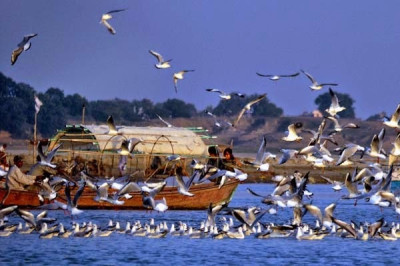
Between the months of September and November, particularly on foggy, windy, moonless nights, certain species of birds become disoriented while flying over the Jatinga valley. Between roughly 6 pm and 10 pm, birds descend suddenly toward sources of light in a limited stretch of land measuring about 1.5 kilometers long and 200 meters wide.
This unusual behavior was once misunderstood and popularly referred to as bird suicides or avian harakiri. However, extensive research has shown that birds do not intentionally harm themselves. Instead, dense fog, strong winds, high altitude conditions, and altered visibility cause confusion and loss of navigation. Disoriented birds mistake artificial lights for safe passage and descend toward the village.
Bird species observed during this phenomenon include tiger bittern, black bittern, little egret, pond heron, Indian pitta, kingfishers, hill partridge, green pigeon, emerald dove, necklaced laughingthrush, and black drongo. Interestingly, many of these birds are diurnal species that would normally rest at night, adding further mystery to the event.
Scientific Research and Global Attention
The phenomenon of Jatinga first drew wider attention in the early 1900s when it was observed by the Zeme Naga tribe, the earliest known inhabitants of the region. Later, renowned naturalist G. Pee brought global focus to Jatinga in the 1960s and invited Dr Salim Ali, the Birdman of India, to study the occurrence. Despite extensive observation, no single definitive cause could be established.
Subsequent studies by ornithologists such as Anwaruddin Chowdhury and researchers from the Zoological Survey of India suggested that atmospheric pressure, fog density, wind direction, and geomagnetic variations may affect the birds sensory orientation. Research also indicated that Jatinga valley offers favorable aerodynamic conditions for migration, making it a natural aerial corridor.
Today, the mystery remains unsolved, adding to the allure of the Jatinga Bird Festival.
Evolution of the Jatinga Bird Festival
The Jatinga Bird Festival began in 2010, initially aimed at promoting tourism using the bird mystery as an attraction. Over the years, the focus shifted decisively toward conservation and awareness. Recent editions of the festival have emphasized rescue and rehabilitation of migratory birds, discouraging any form of hunting or disturbance.
The festival is now a platform for education, where visitors learn about bird behavior, ecology, and the importance of protecting fragile hill ecosystems. Conservation teams monitor bird movements, assist injured birds, and release them safely back into the wild.
Cultural and Tourism Experience
Beyond wildlife awareness, the Jatinga Bird Festival celebrates the rich cultural diversity of Dima Hasao. Cultural programs by local tribes showcase traditional music, dances, attire, and folk customs. The festival grounds come alive with tribal performances, storytelling, and exhibitions highlighting the lifestyle of hill communities.
Adventure and nature-based activities such as guided trekking, forest walks, and water-based recreation add to the experience. The surrounding landscape of misty hills, dense forests, and quiet villages makes the festival ideal for nature lovers, photographers, birdwatchers, and offbeat travelers.
Responsible Tourism and Visitor Guidelines
Visitors attending the Jatinga Bird Festival are encouraged to practice responsible tourism. Observation areas are designated to minimize disturbance to birds. Artificial lighting is controlled, and red-filtered torches are often recommended to reduce visual stress on wildlife.
Travelers are advised to carry warm clothing, waterproof gear, and sturdy footwear due to misty weather and uneven terrain. Evenings can become cool, and visibility may drop quickly as fog rolls in.
How to Reach Jatinga
Jatinga is approximately 350 kilometers from Guwahati, the nearest major airport. The most recommended route is by train or road to Haflong, followed by a short drive of around 20 minutes to reach Jatinga village. The journey through the hills is scenic, passing through semi-evergreen forests, valleys, and cloud-covered ridges.
Accommodation options are primarily available in Haflong, with basic facilities near the festival area. Booking in advance during festival season is advisable.
Why Jatinga Bird Festival Matters
The Jatinga Bird Festival is more than a celebration. It is a reminder of how fragile ecosystems interact with natural forces beyond human control. The festival has successfully transformed fear, myth, and exploitation into awareness, respect, and conservation.
By combining mystery, science, culture, and sustainability, the Jatinga Bird Festival stands as one of Assam's most remarkable eco-cultural events. It offers visitors not just a spectacle, but a deeper understanding of nature's unpredictability and the responsibility humans share in protecting it.