In Depth
Unlike a conventional lake that retains a similar appearance throughout the year, Son Beel has a distinctive seasonal character. This transformation supports fishing, agriculture, local transport and wildlife, making the wetland important not only for its scenery but also for the communities living around it. For travellers interested in nature, photography, birdwatching and rural life, Son Beel offers a different experience from the more familiar hill stations and forest destinations of Assam.
Location and Seasonal Landscape of Son Beel
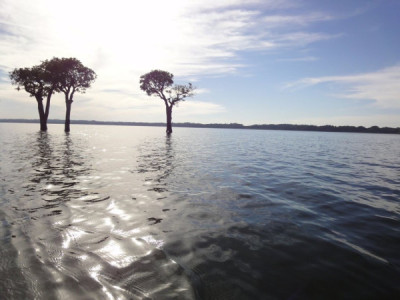
Son Beel lies in the southern part of Assam, within the Barak Valley region. Hills and green countryside surround sections of the wetland, creating a broad natural setting that looks particularly impressive when the basin is filled with water. During the wet season, the lake can cover an area of up to approximately 9,800 hectares, although the actual water spread varies with rainfall and seasonal conditions.
As the monsoon progresses, the expanding water body creates the appearance of a vast inland lake. In the drier winter months, water levels fall and sections of the fertile lakebed are used for cultivating boro rice. This unusual combination of aquatic and agricultural landscapes is one of the defining features of Son Beel.
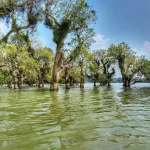
The wetland is also known for its distinctive Hizol trees, scientifically identified as Barringtonia acutangula. These trees can be seen standing in or beside the water, sometimes with their lower trunks submerged. Their reflections, together with open water and distant hills, create an attractive setting for landscape photography.
Shingla River and the Wetland's Ecological Importance
The Shingla River plays a major role in the hydrology of Son Beel, supplying and carrying water through the wetland system. The water network is further connected with the Kakra River and the Kushiara River, forming part of the wider drainage system of the Barak Valley and adjoining areas.
Son Beel is much more than a scenic water body. It supports a complex freshwater ecosystem and provides food, shelter and breeding habitats for different forms of aquatic and terrestrial life. The wetland has been identified as a Key Biodiversity Area (KBA), reflecting its ecological importance.
The water supports a variety of freshwater fish, with local references highlighting more than 69 species and a fish locally known as bhujia. Fishing is an important source of livelihood for families in the surrounding settlements. The wetland also supports otters and other wildlife associated with freshwater habitats.
Birdwatching and Wildlife at Son Beel
Son Beel is an interesting destination for birdwatchers, particularly during the cooler months when migratory birds arrive from northern regions. The wetland is reported to support more than 150 species of resident and visiting birds. Its shallow water, vegetation and surrounding agricultural landscape provide feeding and resting areas for waterbirds and other species.
Birdlife reported from the wider wetland includes the lesser adjutant, black-headed ibis and Pallas's fish eagle, along with several other water-associated and terrestrial birds. Sightings depend on the season, water conditions and the particular areas visited.
Visitors interested in bird photography should carry binoculars and a camera with a suitable zoom lens. It is important to observe birds from a respectful distance, avoid disturbing nesting or feeding areas and follow local guidance when moving through the wetland.
Things to See and Do at Son Beel
1. Explore the Seasonal Lake: The changing water levels are Son Beel's most distinctive attraction. When the wetland is full, visitors can appreciate the immense open-water landscape and its surrounding greenery.
2. Enjoy a Traditional Boat Ride: Local country boats are used by residents for transport and fishing. Where boat operators are available and conditions permit, visitors may be able to arrange a ride to experience the wetland from the water. Confirm the route, price, safety arrangements and availability locally before boarding.
3. Photograph the Hizol Trees: The partially submerged Hizol trees are among the most recognisable features of Son Beel. Their shapes and reflections make interesting subjects for landscape and nature photography.
4. Watch the Sunrise and Sunset: The open horizon and broad water surface offer opportunities to enjoy changing colours in the sky. Early morning and late afternoon are particularly suitable for photography, depending on weather and visibility.
5. Go Birdwatching: Look for resident and migratory birds around suitable wetland edges and feeding areas. Winter can offer rewarding birdwatching opportunities, although sightings are never guaranteed.
6. Observe Local Fishing Activities: Fishing is closely connected with everyday life around Son Beel. Visitors may see traditional fishing methods and boats used by local communities. Observe from public or permitted areas and avoid interrupting working fishermen.
7. Experience Rural Barak Valley Life: Nearby villages offer a glimpse of the region's rural culture, food habits and agricultural practices. A respectful village visit can add a cultural dimension to a nature-focused trip.
Best Time to Visit Son Beel
The suitable time to visit depends on the experience you want. For a water-filled lake landscape and boat rides, plan your trip during the rainy and post-monsoon period, when water levels are sufficiently high and local boat services are operating. The exact period changes from year to year with rainfall and river conditions.
The cooler months are useful for birdwatching and exploring the surrounding countryside. As the water recedes, parts of the wetland gradually reveal agricultural fields, offering a different view of the landscape. Before travelling, check local water levels, road conditions and boat availability, as seasonal changes can affect access.
How to Reach Son Beel from Guwahati
By Road: Guwahati is the main gateway for travellers arriving from other parts of Assam. From Guwahati, travel towards the Barak Valley through the connecting highway network, continuing towards Sribhumi, Badarpur or the local settlements around Son Beel. The journey is long, so allow sufficient time and check current road conditions before departure. From Sribhumi town, local taxis and other transport can be arranged for the onward journey to the wetland.
By Train: Travellers can take a train from Guwahati towards Badarpur or the Sribhumi region, depending on the available railway service and destination. Badarpur Junction is an important rail connection for southern Assam. From the railway station, hire a local taxi or use available road transport to reach the Son Beel area.
By Air: The nearest practical airport for most visitors is Silchar Airport, also known as Kumbhirgram Airport. From the airport, continue by road towards Son Beel through the Barak Valley. Flight schedules and onward transport should be checked before booking.
Local Transport: The final stretch may involve smaller roads and local village routes. Depending on the water level and the location of your chosen access point, a country boat may be required for exploring parts of the wetland. Ask local residents or your accommodation host about the appropriate entry point.
Where to Stay Near Son Beel
Accommodation directly beside Son Beel is limited. Visitors can consider local homestays around the wetland or stay in nearby towns such as Sribhumi, Hailakandi and Badarpur. Silchar is another option for travellers who prefer a larger town with more services, although it involves a longer onward journey.
Homestay Near Son Beel
Shreyansh Homestay, Anandapur (Dargarbond)
This homestay is listed in the supplied local accommodation information as an option near Son Beel. Contact the property in advance to confirm room availability, facilities, current rates and directions.
Phone: +91 7896805449, +91 9476896320, +91 6003802974
Ankaita Residential Homestay, Silchar
Located near Assam University in Silchar, this is a farther-away accommodation option for visitors who prefer to base themselves in the Silchar area.
Phone: +91 8811045993
Hotels in Sribhumi (Karimganj)
Hotel Nakshatra: Silchar Road, opposite ASTC Bus Stand, Sribhumi, Assam 788710/788711.
Phone: +91 80118 40020, +91 69002 22055
Hotel Chandan: Chandraj Plaza, Station Road, near Vishal Mega Mart, Sribhumi, Assam 788710.
Phone: +91 60001 02341, +91 70024 03228
Hotel Sonakshi DX: Shiv Bari Road, Sribhumi, Assam 788710/788711.
Phone: +91 75768 98733, +91 3843 260 100
Hotels and Lodges in Hailakandi
Mannat Lodge: Old LIC Building, Rabindra Sarani Road, Ward Number IV, Bashdahar, Hailakandi, Assam 788151.
Phone: +91 93659 30018
Hotel Executive Inn: First Floor, Landmark-NAHAZ, opposite Om Sweets, N.S. Road/Central Road, Hailakandi, Assam 788151.
Phone: +91 98647 93392
Hotel Purna Lakshmi: Bashdahar, Hailakandi, Assam 788151.
Phone: +91 96784 19871
Hotels in Badarpur
Meera Hotel and Lodging: Karimganj-Silchar Road, near Traffic Police Point, Badarpur, Assam 788806.
Phone: +91 73995 31385, +91 94353 72005
Ahar Hotel: Opposite ASTC Complex, S.T. Road, Badarpur, Assam 788806.
Phone: +91 9435841463, +91 9957979463
Contact the properties directly before travelling to confirm current phone numbers, room availability, prices, facilities and exact directions. The details above are based on the supplied reference information and have not been independently verified.
Travel Tips for Visiting Son Beel
Check the seasonal water level before planning a boat ride.
Confirm local boat availability, charges and safety arrangements in advance.
Carry drinking water, sun protection, insect repellent and suitable footwear.
Take binoculars if birdwatching is part of your visit.
Avoid littering and do not disturb birds, wildlife or fishing activities.
Respect local customs and private agricultural land.
Keep enough cash for local transport and small purchases.
Arrange your return transport before exploring remote parts of the wetland.
Why Son Beel Deserves a Place on Your Assam Travel List
Son Beel brings together an unusual combination of natural beauty, seasonal agriculture, fishing traditions and wetland biodiversity. Its changing landscape, characteristic Hizol trees, birdlife and connection with local communities make it a distinctive destination in southern Assam. Whether you visit for a boat ride, birdwatching, photography or a closer look at rural life in the Barak Valley, Son Beel offers an experience shaped by the rhythms of water and the seasons.
Quick info table
| Attribute | Details |
|---|---|
| Destination | Son Beel (Shon Beel) |
| Location | Sribhumi district, formerly Karimganj, Assam |
| Region | Barak Valley, Southern Assam |
| Type | Seasonal freshwater wetland |
| Approximate maximum area | Up to 9,800 hectares during the water-filled season |
| Main river connection | Shingla River |
| Other river connection | Kakra River and Kushiara River drainage system |
| Known for | Seasonal lake, fishing, birdwatching, boating and Hizol trees |
| Reported bird diversity | More than 150 species |
| Reported fish diversity | More than 69 species |
| Local speciality | Bhujia fish |
| Important biodiversity recognition | Key Biodiversity Area (KBA) |
| Best time for water views | Rainy and post-monsoon months, depending on water levels |
| Best time for birdwatching | Cooler months, particularly winter |
| Nearest major railway connection | Badarpur Junction |
| Nearest practical airport | Silchar Airport (Kumbhirgram) |
| Accommodation | Local homestays and hotels in Sribhumi, Hailakandi, Badarpur and Silchar |
| Main activities | Boat rides, birdwatching, photography and village visits |
Frequently Asked Questions About Son Beel
Q1. Where is Son Beel located in Assam?
Son Beel is located in Sribhumi district, formerly known as Karimganj district, in the Barak Valley of southern Assam. It is one of the region's most prominent natural wetlands.
Q2. Why is Son Beel famous?
Son Beel is famous for being the largest wetland in Assam and for its unusual seasonal transformation. It becomes a vast water body during the rainy season, while parts of its fertile lakebed are used for rice cultivation when the water recedes.
Q3. What is the best time to visit Son Beel?
The best time depends on your interests. Visit during the water-filled season for lake views and possible boat rides. The cooler winter months are suitable for birdwatching and observing the agricultural landscape.
Q4. Can tourists enjoy boat rides at Son Beel?
Local country boats are used by residents for fishing and transportation. Visitors may be able to arrange a boat ride when water levels and local services permit. Confirm availability, charges and safety arrangements before setting out.
Q5. Which river is connected to Son Beel?
The Shingla River is the principal river associated with Son Beel. The wetland's drainage system also connects through the Kakra River and the Kushiara River.
Q6. Is Son Beel a good destination for birdwatching?
Yes. Son Beel supports more than 150 reported species of resident and migratory birds. The winter season can provide opportunities to observe waterbirds and other wetland species.
Q7. What wildlife can be found at Son Beel?
The wetland ecosystem supports freshwater fish, otters and several bird species. Reports also mention mammals such as hog deer in the wider wetland landscape. Wildlife sightings depend on habitat conditions and the season.
Q8. Are hotels and homestays available near Son Beel?
Accommodation directly beside the wetland is limited, but visitors can consider Shreyansh Homestay near Anandapur (Dargarbond) or hotels in Sribhumi, Hailakandi and Badarpur. Silchar also offers accommodation options for those willing to travel farther.
Q9. How can I reach Son Beel from Guwahati?
You can travel from Guwahati by road towards the Barak Valley, take a train to Badarpur or the Sribhumi region, or fly to Silchar Airport and continue by road. Local transport may be needed for the final stretch.
Q10. Is Son Beel a Ramsar site?
The supplied references identify Son Beel as a Key Biodiversity Area (KBA), but do not establish it as a Ramsar site. Its ecological importance makes wetland conservation significant, but KBA recognition and Ramsar designation are different classifications.