In Depth
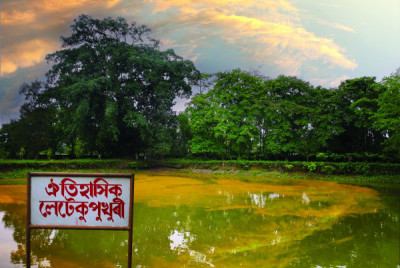
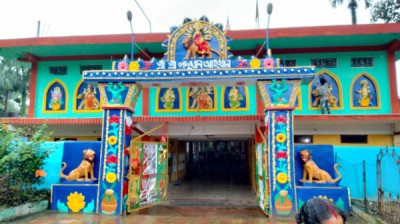
Basudev Than is deeply associated with the Ekasarana Vaishnavism tradition propagated by Srimanta Sankardeva and his lineage. Spread across nearly 200 bighas of land, much of which is covered with dense forest, the Than remains a serene spiritual retreat that has inspired devotion for centuries.
Historical Background of Basudev Than
The origins of Basudev Than trace back to the 14th century. Historical records state that in 1392 AD, Chutia king Satyanarayan of Sadia (Sadhapur) donated land to Narayan for Vishnu worship and established a temple. Due to repeated floods, the original site was abandoned. In 1401 AD, King Lakshminarayan, son of Satyanarayan, restored a part of the temple and donated the land to Rabidas Banasapati, a Brahmin priest.
Later, a descendant of this lineage, Bahud, gifted the land and idol to Damodardev Ata, the grandson of Srimanta Sankardeva, for establishing a Vaishnavite Satra. Damodardev Ata founded the Satra in the mid-17th century during the reign of Ahom king Jayadhwaj Singha. Initially, the institution was known as Laumuri Satra.
According to the Charit Puthi, Swargadeo Jayadhwaj Singha dreamt of Lord Vishnu in his four-armed form on the night Damodardev Ata arrived. The idol of Basudev was later brought from Kundil (Sadiya) and installed near the Subansiri river. Two Satras, Charibhagi and Laumuri, were established and collectively came to be known as Narua Satra.
Evolution into Basudev Than
After Damodardev Ata death, his son Ramakanta Ata became the Satradhikar. Over time, due to floods and political instability, the Satra was relocated multiple times. During the reign of Swargadeo Shivasingha, the shrine was finally shifted to its present location between Champora and Kahanei, gaining recognition as Basudev Than.
In the early 18th century, Ahom king Gaurinath Singha attempted to visit the Satra by boat but had to return midway. The riverbank from where he turned back is now known as Uvata Sampara (Champora).
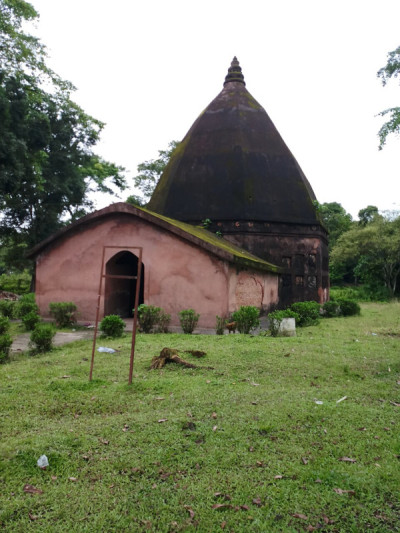
After periods of neglect and destruction caused by invasions, the Satra was revived by Achyut Ata of Narua. In 1935, masons from East Bengal (present-day Bangladesh) constructed the four-cornered brick temple that stands today.
Religious Beliefs and Traditions
Basudev Than is dedicated to Lord Krishna, also known as Basudev, meaning the son of Vasudev and Devaki and the Supreme Brahman. As explained by Mahapurush Madhavdev, Krishna and Basudev represent two aspects of the same divine reality.
A popular belief states that Rukmini herself crafted the idol of Basudev to obtain Krishna as her husband. Devotees believe that prayers offered here are fulfilled, making the Than a powerful center of faith.
One unique tradition of the shrine is that salt is never used in the prasad. Instead, sugar is used, a custom followed to this day.
Festivals and Celebrations
Basudev Than is renowned for its vibrant festivals:
-
Maghi Purnima: Marks the establishment of the Basudev Mandir. The night-long Pal Naam ritual initiated by Achyut Ata continues annually.
-
Holi: Celebrated with kirtans, folk performances, and communal harmony.
-
Janmashtami: Observed with devotion to commemorate the birth of Lord Krishna.
-
Ramdhemali Gai Festival: Involves worship of ancient idols and traditional rituals, including symbolic animal offerings.
Idols and Archaeological Importance
The primary black stone idol of Basudev, about 4 feet (122 cm) tall, dates back to the Chutia kings of Kundil. Numerous ancient Vishnu idols and artifacts recovered from nearby villages such as Ghanhibari, Amud Borbari, and Ubhatamukh are preserved at the Than.
List of Satradhikars of Shri Shri Basudev Than (Narua Satra)
-
Damodardev Ata
Founder of Narua Satra and grandson of Srimanta Sankardeva -
Ramakanta Ata
Son and successor of Damodardev Ata -
Achyut Ata (Narua)
Revived and reorganized Basudev Than during a period of decline -
Gopal Ata
Strengthened religious practices and Satra administration -
Haridev Goswami
Promoted Vaishnavite teachings and Naam-Kirtan traditions -
Madhavdev Goswami (Narua lineage)
Expanded community participation and festival observances -
Krishnadev Goswami
Preserved ancient idols and ritual continuity -
Present Satradhikar
Belongs to the Narua Goswami lineage (name may be updated as per current records)
How to Reach Shri Shri Basudev Than
Where to Stay at Shri Shri Basudev Than
-
Basudev Than Guest House provides accommodation and meals for devotees.
-
Basic lodges and guesthouses are available in Dhakuakhana town.
-
For better facilities, visitors may stay in North Lakhimpur or nearby towns.
-
Assam Tourism and government circuit houses are reliable options.
Entry Time and Fee at Shri Shri Basudev Than
-
Entry Fee: Free
-
Visiting Hours: Open daily; daytime visits recommended
Quick Info Table of Shri Shri Basudev Than
| Feature | Details |
|---|---|
| Name | Shri Shri Basudev Than |
| Also Known As | Narua Satra |
| Location | Dhakuakhana, North Lakhimpur, Assam |
| Deity | Lord Krishna (Basudev) |
| Established | 14th–17th century |
| Area | Approx. 200 bighas |
| Entry Fee | Free |
| Major Festivals | Maghi Purnima, Holi, Janmashtami |
| Nearest Airport | Lilabari Airport |
| Nearest Railway | Nakari Railway Station |
FAQs on Shri Shri Basudev Than