In Depth
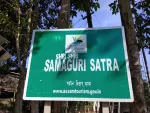
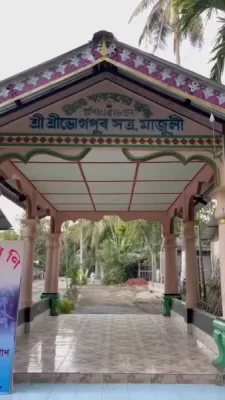
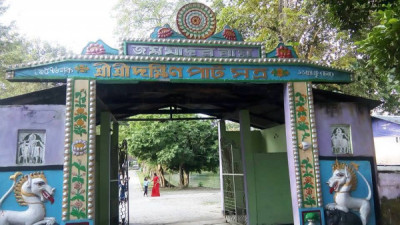
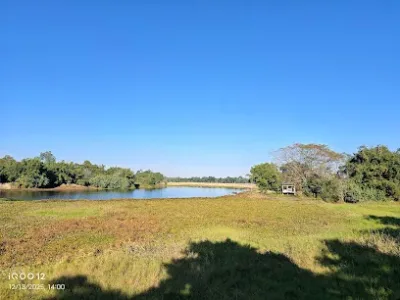
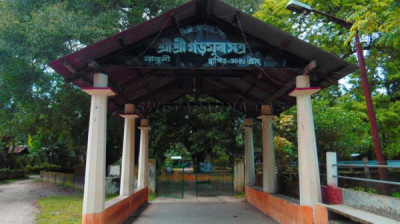
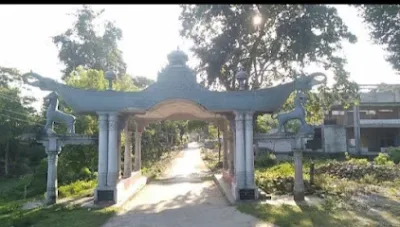
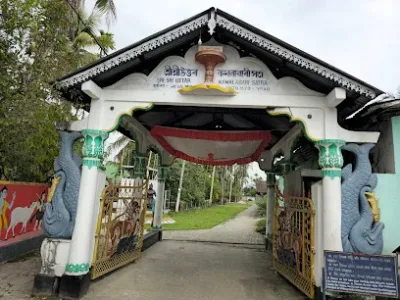
Located at Dhowachala Gaon in Majuli, Samaguri Satra attracts visitors interested in Assamese history, religious traditions, indigenous craftsmanship and performing arts. Its mask-making tradition has been passed down through generations of Sattriya bhakats and artisans, making the Satra an important centre for the preservation of Assam's cultural heritage.
History of Samaguri Satra
Samaguri Satra is traditionally associated with the establishment of a Vaishnavite religious institution in 1663. Historical accounts connect its foundation with Chakrapani Ata, a descendant of Srimanta Sankardeva, and the patronage of Ahom King Chakradhwaj Singha. The Satra is said to have been established during the bright lunar fortnight of the Assamese month of Phalguna.
The name Samaguri is linked in local accounts to a Sam tree near the original site. Over time, the institution experienced relocation and changes in its branches. Historical references mention connections with Jonia Than in Kamarupa and Pachim Samaguri before the development of the present Samaguri Satra in Majuli.
There are also references to related institutions such as Pachim Samaguri Satra, Natun Samaguri Satra and Doloni Samaguri Satra. These are associated with the wider Samaguri tradition and the Purush Samhati stream of Assamese Vaishnavism.
Like other Satras of Assam, Samaguri Satra has played a role in religious learning, community life and cultural education. The Satra tradition developed from the teachings of Srimanta Sankardeva, whose Neo-Vaishnavite movement encouraged devotion, spiritual discipline, artistic expression and participation across different sections of society.
Traditional Assamese Mask-Making – Mukha Shilpa
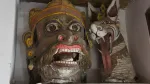
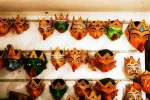
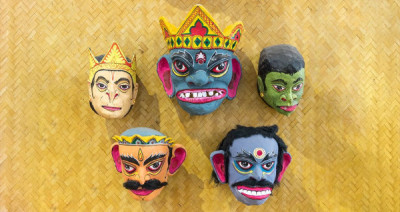
The most distinctive feature of Samaguri Satra is its traditional mask-making practice. The craft produces expressive masks known as mukhas, which are used in Bhaona performances to portray characters from Hindu epics, mythology and devotional stories.
The masks represent a wide range of characters, including Ravana, Hanuman, Ganesha, Narasimha, Varaha, gods, demons and animals. Their colours, facial expressions and shapes help audiences recognise different characters during theatrical performances.
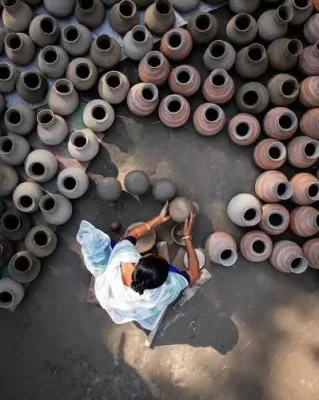
The traditional process begins with a lightweight framework made from bamboo. Layers of cloth are shaped over the frame using clay-based materials, with other traditional ingredients used to strengthen and finish the structure. Artisans then apply natural or locally prepared colours to create the final appearance. Depending on the design and size, a mask can take around 10 to 15 days to complete.
Samaguri's artisans also create larger masks and full-body theatrical forms. Some traditional masks have movable lower jaws, allowing performers to create more expressive movements during a Bhaona presentation.
The craft has received wider recognition beyond Majuli. Majuli's traditional mask-making was granted Geographical Indication recognition in 2024, helping highlight its regional identity and distinctive craftsmanship. Master mask-maker Dr. Hemachandra Goswami, popularly known as Hem Chandra Goswami, received the Padma Shri in 2023 for his contribution to the preservation and promotion of this art.
What to See and Experience at Samaguri Satra
1. Traditional Mask-Making Workshops
A visit to Samaguri Satra offers an opportunity to understand how traditional Assamese masks are made. Visitors may see artisans working with bamboo frames, cloth, clay and colours, depending on workshop activity and availability. Observing the different stages of mask-making provides insight into the patience and skill required to create each piece.
2. Mythological Masks and Bhaona Characters
Explore the different mask designs representing characters from religious and mythological stories. The collection may include human faces, animals, demons and divine figures. The dramatic expressions and distinctive designs demonstrate how masks help bring traditional Assamese theatre to life.
3. Large Masks, Sculptures and Costumes
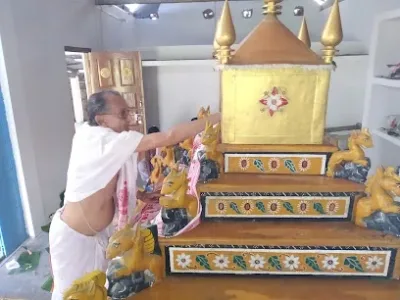
Samaguri's mask-making tradition extends beyond small decorative masks. Visitors may also encounter larger theatrical masks, full-body forms and costume-related displays created for cultural performances. These works demonstrate the scale and versatility of the craft.
4. Namghar and Monastery Courtyard
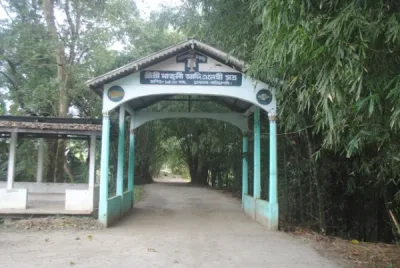
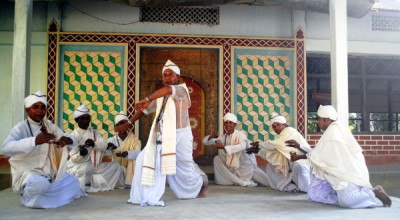
The Satra's religious surroundings provide a glimpse into the traditional layout of a Vaishnavite monastery. The Namghar serves as the principal prayer and community space. Its courtyard, wooden architectural details and peaceful atmosphere reflect the devotional character of the institution.
5. Handcrafted Souvenirs
Visitors may be able to purchase traditional masks directly from local artisans or the mask-making centre, subject to availability. These handmade objects make meaningful souvenirs and help support the continuation of the craft. Other local handicrafts, including products made from water hyacinth, may also be found in the region.
Cultural Importance of Samaguri Satra
Samaguri Satra is an important centre for preserving the relationship between Assamese religious traditions and performing arts. Bhaona uses music, storytelling, costumes and masks to present episodes from devotional literature. The masks help performers represent characters and communicate the story to audiences.
The Satra's work also demonstrates how traditional knowledge is transferred between generations. The continued involvement of bhakats and artisans has helped keep the craft alive while introducing it to visitors, researchers and cultural institutions outside Assam.
Its mask-making tradition has attracted national and international attention, including interest from major cultural collections and museums. This recognition has helped bring Majuli's distinctive artistic heritage to a wider audience.
Best Time to Visit Samaguri Satra
October to March is generally a comfortable period to explore Majuli because the weather is comparatively pleasant and suitable for sightseeing. November is especially popular because Majuli hosts the Raas Mahotsav, one of its major cultural celebrations.
Visitors interested in observing mask-making should plan their visit during daytime hours and check in advance whether artisans or workshop demonstrations will be available. Ferry operations and local transport can be affected by weather and river conditions, so it is sensible to keep some flexibility in the itinerary.
How to Reach Samaguri Satra from Guwahati
Samaguri Satra is located on Majuli island, and the journey from Guwahati involves travelling to Jorhat and crossing the Brahmaputra River by ferry.
By Road: Guwahati is approximately 300–330 km from Jorhat by road, depending on the route. The journey generally takes around 6–7 hours, subject to traffic and road conditions. From Jorhat, continue towards Nimati Ghat, which is the main ferry point for Majuli.
By Train: Jorhat Town and Mariani Junction are useful railway stations for reaching the region. From either station, hire a taxi or use local transport to reach Nimati Ghat.
By Air: Jorhat Airport, also known as Rowriah Airport, is the nearest airport serving the area. From the airport, travel by taxi to Nimati Ghat.
By Ferry: Board a ferry from Nimati Ghat to a designated ferry terminal on Majuli, such as Kamalabari or Aphalamukh, depending on the service operating on the day. The crossing commonly takes around 45–90 minutes, but duration and schedules can vary with river conditions and the ferry route.
From Majuli Ferry Ghat to Samaguri Satra: After reaching the island, hire a local taxi, auto or other available vehicle to Dhowachala Gaon / Rawanapar. Samaguri Satra is approximately 8–10 km from the Garamur or Kamalabari area, depending on the starting point and route. Bicycles and scooters may also be practical for exploring the island.
Ferry services generally operate during daylight hours. Confirm the latest departure times and return arrangements locally, particularly if travelling later in the afternoon.
Where to Stay Near Samaguri Satra
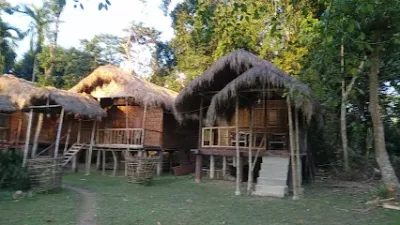
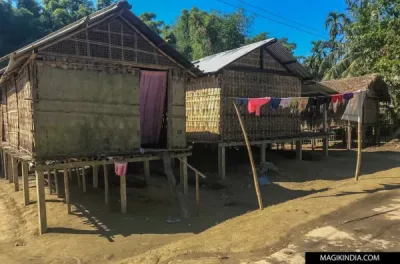
Visitors can stay close to Samaguri Satra or choose accommodation in nearby parts of Majuli, including Garamur and Kamalabari. These areas offer homestays, guesthouses, bamboo cottages and other small accommodation options.
Majuli Backpackers Inn is a convenient option for visitors whose main purpose is to explore Samaguri Satra and its mask-making museum. It is located opposite the Satra and is listed with an indicative rate of around ₹1,575 per night. Room rates and availability may change, so contact the property before travelling.
Visitors who prefer a wider choice of accommodation can look for homestays and guesthouses around Garamur and Kamalabari. Booking ahead is advisable during the Raas Mahotsav and other busy travel periods.
Where to Stay in Majuli – Accommodation Directory
Resorts, Bamboo Cottages and Eco Camps
Accommodation | Address | Phone / Contact |
|---|---|---|
Dekasang Resort | Sitadar Chuk, near River Luit, Garmur Chariali, Majuli, Assam 785104 | +91 9854715435, +91 8134074656, +91 8724994315; alternate number supplied: +91 84748 38295 |
Prashaati Tourist Complex | NLK Road, near Kamalabari Ferry Ghat, Kamalabari Satra, Bhogpur Satra, Majuli, Assam 785106 | +91 3775-2730901, +91 9854858353, +91 9435734138, +91 9401094734 |
Ygdrasill Bamboo Cottage | Jengraimukh Road, Doria Gaon, Majuli, Assam 785104 | +91 8876707326 |
Resort Sunrise Majuli | Borun Chitadar Chuk Sunapur, Bukura, Majuli, Assam 787052 | +91 8811987272 |
Mahabahu Bamboo Cottage | KB Road, Pohar Dia, near Kamalabari Satra, Majuli, Assam 785106 | +91 7578057332, +91 6000746273 |
Ayang Okum River Bank Bamboo Cottage | Sitadar Chuk, near River Luit, Chariali, Garmur, Kaibortta Gaon, Majuli, Assam 785104 | +91 9435546455 |
Majuli Pushpa Bilash (Bamboo Resort) | Near Uttar Kamalabari Satra, Garamur Phutuki Chapori, Majuli, Assam 785106 | +91 7576080881, +91 6001684768 |
Enchanting Majuli Resort | Near Veterinary Field, Garamur Chariali / Natun Kulamora Chapori, Majuli, Assam 785104 | +91 943506217, +91 7002438179 |
Mepo Okum Eco Camp | Kaibortta Gaon, Majuli, Assam 785104 | +91 9435203165, +91 8011209038, +91 9862345965 |
Jonki Panoi Bamboo Cottages by WCH | Dhapak Chari, Upper Katoni, near Kamalabari Satra, Majuli, Assam 785106 | +91 7399888822 |
SIANG The Island Resort | Chitadar Chuk, Garamur, Majuli, Assam 785104 | +91 6901518823 |
River Wind Cottage | DC Court Road, Garamur Phutuki Chapori, Monika Pathar, Majuli, Assam 785104 | +91 9435203024 |
Ruwad: Okum Bamboo Cottages | Chitadar Chuk, Garamur Phutuki Chapori, Majuli, Assam 785104 | +91 93946 96559 |
Shantikunj Bamboo Cottage | Garamur Saru Satra, opposite Veterinary Sub-centre, Garamur Chariali, Majuli, Assam 785104 | +91 98643 48113 |
Homestays, Guest Houses and Lodges
Accommodation | Address | Phone / Contact |
|---|---|---|
Okegiga Homes | Chitadar Chuk, Garamur Phutuki Chapori, Majuli, Assam 785104 | +91 8822390306; alternate formatting supplied: +91 88223 90306 |
La Maison de Ananda | Natun Kulamora Chapori N.C., Majuli, Assam 785104 | +91 9957186356 |
Sukanya Home Stay | Kamalabari, Majuli, Assam 785104 | +91 9101829796 |
Dutta Guest House | Kamalabari, Majuli, Assam 785104 | +91 9435292582 |
Niribili Home Stay / Niribili Homestay | Kamalabari Chariali, Uttar Kamalabari Satra Road, near Kamalabari CHC Campus Road, Majuli, Assam 785106 | +91 9864165280, +91 9435788736, +91 6001047487 |
Seuj Bilas | Kamalabari, Majuli, Assam 785104 | +91 9435734138 |
Jyoti Home Bamboo Garden Lodge / Jyoti Bamboo Garden Homestay | Kulamora Chapori N.C., near Namghar, Garamur Saru Satra, Majuli, Assam 785104 | +91 9435657282 |
Risong Family Guest House | Garamur Chariali, near Garmur Satra, Natun Kulamora Chapori N.C., Majuli, Assam 785104 | +91 9957186356 |
Hotel Srimanta Sankardev, Majuli | NLK Road, Garmur, Majuli, Assam 785104 | +91 9435570844, +91 8099032340, +91 7905985108 |
Rupali Tant Ghar and Homestay | Tourism Tiniali, Auniati Road, Kamalabari Chariali, Doria Gaon, Majuli, Assam 785106 | +91 9101829796, +91 9435656888 |
Apun Majuli Guest House | Majuli College Road, Kamalabari Satra, Kamalabari Chariali, Majuli, Assam 785106 | +91 9864777937; another supplied listing did not provide a number |
Maa Sumthira Lodge | Garamur Satra Road, Natun Kulamora Chapori N.C., Majuli, Assam 785104 | +91 9365774128 |
Uttar Kamalabari Satra Guest House | Garamur Phutuki Chapori, Majuli, Assam 785106 | +91 9954984797 |
Ratul Homestay | 2 No. Phutuki, Garamur, Kamalabari, Majuli, Assam 785106 | +91 9435546252, +91 9365153707 |
Dharitry Homestay Majuli | Doria Gaon, Majuli, Assam 785106 | +91 9394125107, +91 9864534329 |
Sugandhalok Homestay | Upper Katoni, near NLK Road, Majuli, Assam 785106 | +91 9435614417 |
Trishna Homestay | Upper Katoni Road, near Natun, near Water Supply, Kamalabari Satra, Majuli, Assam 785106 | +91 9864701250, +91 9365620873 |
Tourism and Travel Contacts
Organisation / Service | Contact Details |
|---|---|
Visit Majuli | +91 92095 10723; bookings@visitmajuli.com |
Majuli Tourism | +91 94356 57282 |
Majuli River Island / Jungle Ideas Tourism | +91 70868 73676; WhatsApp: +91 60016 85490; jungleideastourism@gmail.com |
Assam Tourism – Log Hut Enquiries | +91 98548 58353 |
Whom to Contact
For visitor-related information about Samaguri Satra and the mask-making centre, the following number has been listed:
Samaguri Satra / Mask Making Centre Visitor Contact: +91 94019 37283
Visitors should confirm the number and current workshop timings before travelling. For accommodation, contact Majuli Backpackers Inn directly at +91 74160 91519.
Visitor Tips
Visit during daytime if you want to observe the mask-making process.
The mask-making centre is commonly listed as open around 9:00 AM to 5:00 PM, but timings may vary.
Ask permission before photographing artisans, monks, religious spaces or ongoing activities.
Handle masks and other handmade objects carefully, particularly if they are part of a display.
Carry cash for local purchases and small transport expenses.
Check ferry timings before leaving Jorhat and plan your return journey in advance.
Respect the religious environment and follow instructions given by the Satra authorities.
Samaguri Satra is more than a religious institution; it is a living centre of Assamese artistic heritage. Its traditional Mukha Shilpa, devotional theatre connections and generations of skilled artisans make it one of the most distinctive cultural attractions in Majuli. For anyone exploring the Satras of Assam, a visit to Samaguri offers a memorable opportunity to understand the island's unique blend of spirituality, craftsmanship and performing arts.
Quick Information Table
Particulars | Details |
|---|---|
Name | Sri Sri Samaguri Satra |
Location | Dhowachala Gaon / Rawanapar, Majuli, Assam, India |
PIN Code | 785110 |
Established | 1663 (commonly cited historical date) |
Founder | Sri Sri Chakrapani Ata, according to the supplied historical references |
Religious Tradition | Neo-Vaishnavism |
Famous For | Traditional Assamese mask-making (Mukha Shilpa) |
Main Attractions | Mask-making workshops, Namghar, traditional masks and monastery courtyard |
Associated Art Form | Bhaona and Sattriya cultural traditions |
Best Time to Visit | October to March |
Approximate Distance | Around 8–10 km from Garamur or Kamalabari, depending on the route |
Typical Visiting Time | Daytime; mask-making centre visits are commonly listed around 9:00 AM–5:00 PM |
Nearby Stay | Majuli Backpackers Inn and other homestays around Majuli |
Contact Number | +91 94019 37283 (listed visitor contact; verify locally) |
FAQs
1. Where is Samaguri Satra located in Assam?
Samaguri Satra is located at Dhowachala Gaon / Rawanapar on Majuli island in Assam. Its PIN code is 785110.
2. Why is Samaguri Satra famous?
Samaguri Satra is famous for preserving the traditional Assamese mask-making art known as Mukha Shilpa. These masks are used in Bhaona and other cultural performances.
3. Who founded Samaguri Satra?
Historical accounts traditionally associate Samaguri Satra with Chakrapani Ata and its establishment in 1663 during the reign of Ahom King Chakradhwaj Singha.
4. What is Mukha Shilpa?
Mukha Shilpa is the traditional Assamese craft of making masks using materials such as bamboo, cloth, clay and natural colours. The masks represent mythological and theatrical characters.
5. Can visitors watch mask-making at Samaguri Satra?
Visitors may be able to observe artisans making traditional masks during daytime hours, depending on workshop activity. It is advisable to confirm availability before visiting.
6. What are the opening hours of Samaguri Satra?
The Satra grounds are sometimes listed as open throughout the day, while the mask-making centre is commonly visited between approximately 9:00 AM and 5:00 PM. Confirm the current timings locally.
7. How far is Samaguri Satra from Guwahati?
Samaguri Satra is on Majuli island. Visitors generally travel from Guwahati to Jorhat, proceed to Nimati Ghat, take a ferry to Majuli and then continue by local transport to Dhowachala Gaon.
8. What is the best time to visit Samaguri Satra?
October to March is generally a pleasant period to visit. November is particularly popular because of the Raas Mahotsav celebrations in Majuli.
9. Where can I stay near Samaguri Satra?
Majuli Backpackers Inn, located opposite Samaguri Satra, is a nearby accommodation option. Visitors can also find homestays and guesthouses around Garamur and Kamalabari.
10. What is the contact number of Samaguri Satra?
The visitor contact number listed for Samaguri Satra and its mask-making centre is +91 94019 37283. Visitors should verify the number and workshop availability before travelling.