In Depth
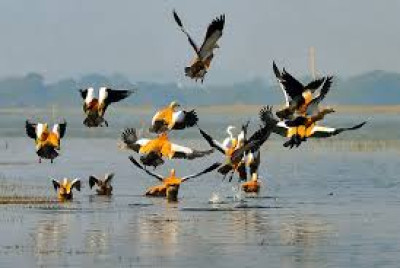
In recent years, the wetland has emerged as a major biodiversity hotspot, recording more birds than the existing Ramsar Sites of Northeast India, namely Deepor Beel (Assam) and Loktak Lake (Manipur). According to the 6th Kaziranga Wetland Bird Census 2025, the complex recorded 47,000+ birds from over 88 to 120 species, including several globally threatened and rare species. Because of its outstanding ecological value, conservationists and forest officials have urged the government to declare it a Ramsar Site, which would make it Assam's second Ramsar Wetland after Deepor Beel and the fifth in Northeast India.
Biodiversity and Ecological Importance
The Rowmari–Donduwa Wetland Complex supports a remarkable range of wildlife. Among birds, it regularly hosts species such as the Knob-billed Duck, Black-necked Stork, Lesser Adjutant Stork, Ferruginous Pochard, and Common Pochard. During winter, thousands of migratory waterfowl arrive, making it one of Assam's most important birdwatching destinations.
Beyond birds, the wetland also provides habitat and movement corridors for endangered mammals including the Great Indian One-horned Rhinoceros, Royal Bengal Tiger, and Asiatic Water Buffalo, strengthening genetic diversity between Kaziranga and Orang populations.
Ecologically, the wetland delivers vital ecosystem services such as:
-
Flood regulation and water retention
-
Groundwater recharge
-
Carbon storage
-
Support for fisheries and eco-tourism-based livelihoods
Because it fulfills eight out of nine Ramsar criteria, the site qualifies as a Wetland of International Importance under the Ramsar Convention, further highlighting its global conservation value.
Best Time to Visit Rowmari–Donduwa Wetland Complex
The best time to visit Rowmari–Donduwa Wetland Complex is from November to March, when winter migratory birds arrive in large numbers and water levels stabilize, making birdwatching easier and more rewarding.
-
Peak season: December to February
-
Best time of day: Early morning and late afternoon
-
Ideal for: Birdwatching, wildlife photography, nature tourism, wetland research
During the monsoon months, access may be limited due to flooding and marshy terrain.
How to Reach Rowmari–Donduwa Wetland Complex
Location: Inside Laokhowa Wildlife Sanctuary, Nagaon district, Assam
By Air
The nearest major airport is Lokpriya Gopinath Bordoloi International Airport (Guwahati), located about 130 km away. From Guwahati, visitors can hire taxis or use buses to reach Nagaon and onward to Laokhowa Wildlife Sanctuary.
By Train
The nearest convenient railway station is Nagaon Railway Station, while Jagiroad Railway Station is also nearby. From either station, taxis and local transport are available.
By Road
Rowmari–Donduwa is accessible by road from Nagaon town via hired taxis, private vehicles, or local transport towards Laokhowa Wildlife Sanctuary. The wetland lies within the sanctuary zone.
Where to Stay Near Rowmari–Donduwa Wetland Complex
Accommodation options near the wetland are limited, but visitors can choose from the following:
-
Forest Department Guest Houses and Eco-camps: Located within or near Laokhowa Wildlife Sanctuary (advance booking required).
-
Nagaon Town Hotels and Homestays: Best choice for comfort and accessibility.
-
Kaziranga Area Resorts: Staying near western Kaziranga or Burhachapori Wildlife Sanctuary is also convenient due to landscape connectivity.
Why Visit Rowmari–Donduwa Wetland Complex
-
One of Assam's richest birdwatching wetlands
-
Recorded 47,000+ birds in a single census
-
Strong contender for Ramsar Site designation
-
Critical wildlife corridor between Kaziranga and Orang
-
Ideal destination for nature lovers, photographers, and conservation enthusiasts
Quick Info Table on Rowmari–Donduwa Wetland Complex
| Feature | Details |
|---|---|
| Name | Rowmari–Donduwa Wetland Complex |
| Location | Laokhowa Wildlife Sanctuary, Nagaon district, Assam |
| Area | Approximately 2.5 to 3 sq km |
| Landscape | Floodplain-marsh wetland system |
| Bird Count | 47,000+ birds (2025 census) |
| Bird Species | 88 to 120 species |
| Key Birds | Knob-billed Duck, Black-necked Stork, Ferruginous Pochard |
| Wildlife Corridor | Connects Kaziranga and Orang National Parks |
| Best Time to Visit | November to March |
| Ramsar Status | Strong candidate, fulfills 8 of 9 criteria |
FAQs on Rowmari–Donduwa Wetland Complex
1. What is Rowmari–Donduwa Wetland Complex famous for?
Rowmari–Donduwa Wetland Complex is famous for hosting over 47,000 birds from more than 88 species and for being a major birdwatching hotspot in Assam near Kaziranga National Park.
2. Where is Rowmari–Donduwa Wetland Complex located?
It is located inside Laokhowa Wildlife Sanctuary in Nagaon district, Assam, forming part of the Kaziranga–Orang wildlife corridor.
3. Why is Rowmari–Donduwa important for conservation?
The wetland supports endangered birds and mammals, provides flood control and groundwater recharge, and fulfills eight Ramsar criteria, making it eligible for Wetland of International Importance status.
4. What is the best time to visit Rowmari–Donduwa Wetland Complex?
The best time to visit is from November to March when migratory birds arrive and wetland conditions are ideal for birdwatching.
5. How many bird species are found in Rowmari–Donduwa Wetland Complex?
The 2025 census recorded more than 47,000 birds from approximately 88 to 120 species, making it richer in bird diversity than Northeast India's existing Ramsar wetlands.
6. How do I reach Rowmari–Donduwa Wetland Complex?
You can reach via Guwahati airport, Nagaon or Jagiroad railway stations, and then travel by road to Laokhowa Wildlife Sanctuary.
7. Are there accommodation options near Rowmari–Donduwa Wetland Complex?
Yes, visitors can stay at forest guest houses near Laokhowa Wildlife Sanctuary, hotels in Nagaon town, or resorts around western Kaziranga and Burhachapori.
8. Is Rowmari–Donduwa a Ramsar Site?
It is not yet officially designated but is a strong candidate and fulfills eight of the nine Ramsar criteria, which could make it Assam's second Ramsar Site.
9. What animals are found near Rowmari–Donduwa Wetland?
Apart from birds, the wetland supports the Great Indian One-horned Rhinoceros, Royal Bengal Tiger, Asiatic Water Buffalo, and other wildlife species.
10. Can tourists visit Rowmari–Donduwa Wetland Complex?
Yes, tourists interested in birdwatching, photography, and nature tourism can visit, though access is regulated as it lies within a protected wildlife sanctuary.