In Depth
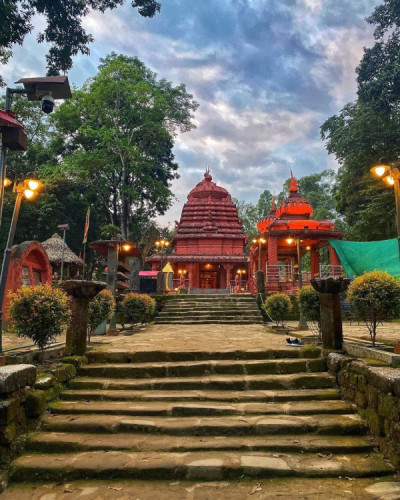
The surviving remains of Malini Than are generally associated with the medieval period, although art-historical studies suggest that the cultural development represented at the site may cover a wider period. The principal temple remains are commonly dated to around the 13th and 14th centuries, while some studies place the artistic development of the sculptures within a broader period extending from approximately the 10th to the 14th century. The site is often associated with the Chutia period of Assam, although its architectural and artistic history is more complex than a single date or dynasty.
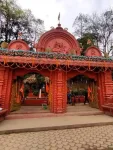
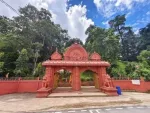
One of the most remarkable features of Malini Than is the extensive use of stone. Large granite blocks and intricately carved sculptures provide evidence of sophisticated craftsmanship. Archaeological investigations carried out during the 20th century brought several architectural fragments, sculptural pieces and temple remains to light. Figures representing Hindu deities and animals have been found among the archaeological material, providing valuable evidence about the religious art of medieval northeastern India.
The site has also attracted interest because of its connection with different forms of goddess worship. Some scholars have associated the principal deity represented at Malini Than with Dikkaravasini, a goddess mentioned in the Kalika Purana and connected with the religious traditions of northeastern Assam. Other interpretations have connected the site's religious identity with regional and indigenous goddess traditions. These scholarly interpretations demonstrate the complex cultural history surrounding the temple.
Malini Than is equally famous for its local mythology. According to a popular Hindu legend, Lord Krishna and Rukmini passed through this region after their marriage. Goddess Parvati is said to have welcomed them with flowers and appeared in the form of a woman associated with flowers. The story is traditionally linked with the name "Malini", giving the site its familiar name, Malini Than. This legend remains an important part of the cultural identity of the place, although it belongs to the realm of religious tradition rather than archaeological evidence.
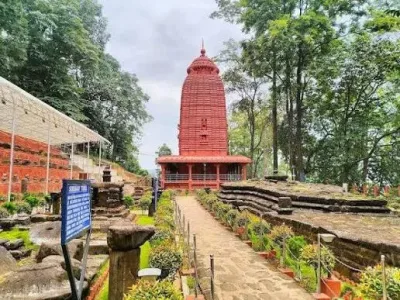
The archaeological importance of Malini Than can be seen in its stone sculptures and architectural fragments. Visitors may encounter representations of deities and mythological figures, along with animal motifs and decorative elements. Sculptures associated with Surya, Ganesha, Nandi and Indra have been reported among the site's archaeological remains. Together, these objects provide an insight into the artistic traditions and religious practices of the period.
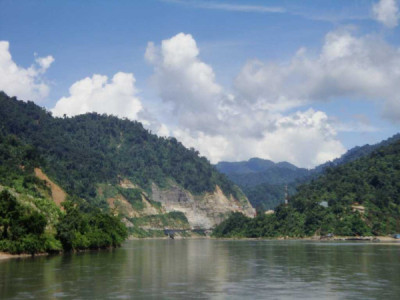
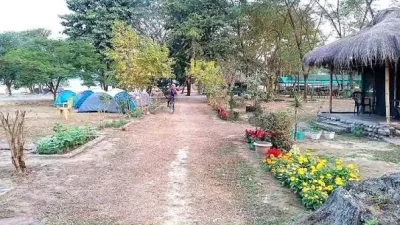
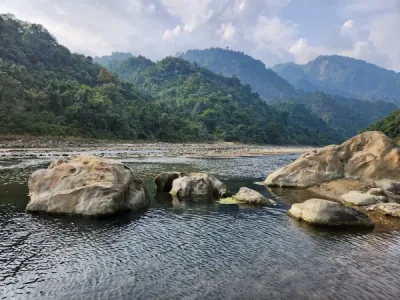
The location of Malini Than also adds to its appeal. The temple remains stand in a naturally scenic area surrounded by greenery and views towards the hill ranges near the Assam-Arunachal Pradesh border. The combination of an ancient archaeological site and a peaceful natural environment makes Malini Than attractive to pilgrims, photographers, history enthusiasts and travellers interested in lesser-known destinations in Assam.
For visitors exploring Dhemaji district, Malini Than can be included in a heritage-focused journey along with other historical and religious destinations. Silapathar is a convenient nearby town, while destinations such as Maa Manipuri Than and Ghuguha Dol can be considered for a broader exploration of Dhemaji's historical landscape.
The site is particularly valuable for understanding the cultural history of Assam before and around the period of Ahom political expansion. The artistic traditions visible at Malini Than reflect the influence of wider Indian temple architecture while retaining connections with the religious culture of northeastern India. Its location also highlights the historical importance of the region around the Brahmaputra Valley and the adjoining foothills.
Visitors should treat Malini Than as both a religious and archaeological heritage site. Ancient stone carvings and remains should not be touched, climbed on or damaged. Photography should be carried out responsibly, particularly around religious areas and museum collections. Comfortable footwear is recommended because parts of the site involve walking and climbing.
Malini Than is an excellent destination for travellers looking beyond the most popular tourist attractions of Assam. Its combination of ancient stone architecture, archaeological discoveries, religious traditions, mythology and scenic surroundings makes it a distinctive heritage destination near Silapathar and the Assam-Arunachal Pradesh border. For anyone interested in ancient temples, Assam history, archaeology and cultural tourism, Malini Than offers a fascinating glimpse into the region's early medieval heritage.
HISTORY OF MALINI THAN
The history of Malini Than extends across several centuries and is represented today mainly through its archaeological remains, sculptures and architectural fragments.
Historians and archaeologists have commonly associated the principal temple complex with the Chutia period, particularly around the 13th and 14th centuries. However, art-historical studies have identified a broader cultural period represented by the sculptures, suggesting that artistic activity at the site may have developed over a longer period.
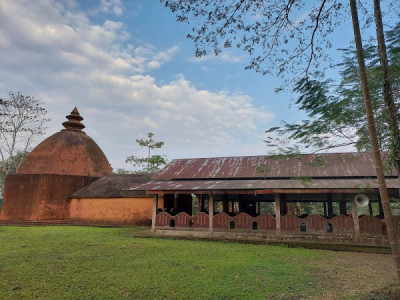
The architecture is particularly notable for its extensive stone construction. Large granite blocks were used in the temple complex, while numerous sculptural elements demonstrate the skill of the craftsmen who worked at the site.
Archaeological excavations conducted between 1968 and 1971 helped document important remains of the temple complex. The excavated material included architectural pieces, stone panels, sculptures and decorative elements that helped researchers understand the site's historical and artistic importance.
Malini Than is not prominently documented in some early religious texts, including the 10th and 11th-century versions of the Kalika Purana. This has led researchers to consider the possibility that the location may have had an earlier local sacred tradition before the construction or expansion of the formal temple complex.
The site therefore represents more than one historical phase. Its surviving remains provide evidence of medieval temple construction, while local religious traditions preserve stories that continue to shape the identity of Malini Than today.
ARCHITECTURE AND SCULPTURES OF MALINI THAN
The stone architecture is one of the main reasons Malini Than is important to archaeologists and history enthusiasts.
Unlike many historic structures in Assam that made extensive use of brick, the surviving remains at Malini Than are notable for their granite construction. The stonework includes decorative panels and sculptural representations showing considerable artistic skill.
Among the reported sculptures are figures connected with major Hindu traditions, including Surya with his chariot, Ganesha with his vehicle, Nandi the bull and Indra associated with Airavata. These sculptures provide visitors with a visual understanding of the religious art of the period.
The architectural character of the site has also been compared with the temple-building traditions of Odisha, particularly the Kalinga or Orissan style. The comparison is useful for understanding the wider artistic connections that existed across different parts of medieval India.
MYTHOLOGICAL SIGNIFICANCE OF MALINI THAN
A popular legend connects Malini Than with Lord Krishna, Rukmini and Goddess Parvati.
According to the traditional story, Krishna and Rukmini travelled through the region after their marriage. Goddess Parvati is believed to have welcomed them with flowers while appearing in the form of a flower-bearing woman. Krishna was pleased by the welcome and is traditionally said to have given her the name Malini.
This story is one of the reasons the site continues to have strong religious and cultural appeal. It should be understood as local religious tradition and mythology rather than as archaeological evidence for the site's historical construction.
WHAT TO SEE AT MALINI THAN?
BEST TIME TO VISIT MALINI THAN
October to March is generally the most comfortable period for visiting Malini Than. The weather during the winter and post-monsoon months is more suitable for sightseeing, walking and exploring the archaeological remains.
The monsoon season can bring heavy rainfall to the region, which may make outdoor movement and road travel less convenient. Visitors planning a monsoon trip should check weather and local road conditions before travelling.
Visitors interested in religious celebrations may also consider checking the local festival calendar before planning their visit.
HOW TO REACH MALINI THAN FROM GUWAHATI?
Dhemaji Railway Station is another option for travellers approaching the destination through Dhemaji town.
WHERE TO STAY NEAR MALINI THAN?
Silapathar is the most convenient town for visitors who want to stay close to Malini Than. It provides access to local hotels, lodges, restaurants and transportation.
Dhemaji town is another practical option, particularly for travellers who want to explore several destinations across the district. Visitors can find basic accommodation and food facilities in and around the district headquarters.
Travellers looking for a wider choice of hotels can also consider Dibrugarh, although it is considerably farther from Malini Than.
Hotel availability, room rates and facilities can change, so visitors should confirm current accommodation details before travelling.
WHAT TO OFFER AT MALINI THAN?
Visitors coming for religious purposes may offer flowers, fruits, sweets, incense and traditional lamps according to the customs followed at the site.
There is no need to assume that a particular offering is compulsory. Visitors should ask the temple authorities or local worshippers about the appropriate practice, especially during festivals or special ceremonies.
Respect for local religious customs is more important than the type or value of an offering.
GENERAL GUIDELINES FOR VISITORS
Wear comfortable footwear suitable for walking and climbing.
Dress respectfully because Malini Than has religious as well as archaeological importance.
Follow local instructions regarding entry into restricted areas.
Do not climb, sit on or damage ancient sculptures and architectural remains.
Do not remove stones, artefacts or archaeological material from the site.
Ask permission before photographing people involved in religious activities.
Keep the surroundings clean and avoid plastic litter.
Carry drinking water during the visit.
Check weather and road conditions before travelling during the monsoon.
Allow sufficient time to explore the archaeological remains instead of rushing through the site.
NEARBY PLACES TO VISIT
QUICK INFO ABOUT MALINI THAN
| Information | Details |
|---|---|
| Tourist Place | Malini Than |
| Alternate Name | Malinithan |
| Location | Near Likabali, Dhemaji district, Assam |
| Region | Assam-Arunachal Pradesh border area |
| Nearest Town | Silapathar |
| Distance from Silapathar | Approximately 8-10 km |
| Distance from Dhemaji | Approximately 40 km |
| Type | Archaeological site and historic temple |
| Main Material | Granite stone |
| Historical Association | Medieval Assam and Chutia period |
| Main Archaeological Period | Commonly associated with 13th-14th centuries |
| Broader Artistic Period | Approximately 10th-14th centuries |
| Religious Association | Hindu goddess worship |
| Main Features | Temple ruins, stone sculptures and architectural remains |
| Nearest Railway Station | Silapathar Railway Station |
| Other Railway Option | Dhemaji Railway Station |
| Nearest Air Gateway | Lilabari Airport |
| Other Airport Option | Dibrugarh Airport |
| Best Time to Visit | October to March |
| Ideal For | History, archaeology, religion, architecture and photography |
| Recommended Stay | Silapathar or Dhemaji |
| State | Assam |
| Country | India |
FREQUENTLY ASKED QUESTIONS ABOUT MALINI THAN
- Where is Malini Than located?
Malini Than, also known as Malinithan, is located near Likabali in the western part of present-day Dhemaji district of Assam, close to the Assam-Arunachal Pradesh border.
- Why is Malini Than famous?
Malini Than is famous for its ancient temple ruins, granite sculptures, archaeological remains, religious traditions and the legends associated with Lord Krishna, Rukmini and Goddess Parvati.
- What is another name for Malini Than?
Malini Than is also commonly known as Malinithan. Both names are used when referring to the historic archaeological and religious site.
- Who built Malini Than temple?
The principal temple remains are generally associated with the medieval period and are often linked with the Chutia period. Archaeological and art-historical studies indicate that the cultural development represented at the site may cover a wider period.
- How old is Malini Than?
The main temple complex is commonly dated to around the 13th and 14th centuries, while art-historical evidence from the sculptures has been interpreted as representing a broader period extending from approximately the 10th to the 14th century.
- What can I see at Malini Than?
Visitors can see ancient stone temple remains, granite architectural elements, carved sculptures and archaeological artefacts. The surrounding green landscape and nearby hills also make the site visually attractive.
- How far is Malini Than from Silapathar?
Malini Than is approximately 8-10 km from Silapathar, making Silapathar one of the most convenient towns from which to visit the archaeological site.
- How can I reach Malini Than from Guwahati?
Visitors can travel from Guwahati towards North Lakhimpur, Dhemaji and Silapathar by road, or use train services towards Silapathar. From Silapathar, local taxis and auto-rickshaws can be used to reach Malini Than.
- What is the best time to visit Malini Than?
October to March is generally the best period for visiting Malini Than because the weather is more comfortable for walking, sightseeing and exploring the archaeological remains.
- Where should I stay when visiting Malini Than?
Silapathar is the closest practical base for visitors, while Dhemaji provides another accommodation option. Travellers wanting more extensive hotel choices can consider staying in Dibrugarh and travelling to the site as part of a larger itinerary.