In Depth
Set on a small hillock, Malegarh is more than an old burial ground. It represents a chapter of regional history that is often less familiar to visitors exploring Assam. The graves, memorial markers and historical accounts associated with the place recall the sacrifices of the sepoys who challenged colonial authority and lost their lives during the conflict. For history enthusiasts, students and travellers interested in India's freedom movement, Malegarh offers an opportunity to understand the contribution of southern Assam and the wider Northeast to the events of 1857.
Historical Background: The Revolt of 1857 in Northeast India
The events connected with Malegarh began in November 1857, when soldiers of the 34th Native Infantry stationed at Chittagong rose against British authority. Historical accounts describe how the rebellious troops seized arms and ammunition, freed prisoners and took resources before leaving Chittagong. They then travelled through the adjoining territories, including areas associated with Tripura and the hills, with the intention of moving towards Manipur.
Their movement brought them into the southern part of the Sylhet region, which at that time had administrative and geographical connections different from those of the present-day India-Bangladesh boundary. British officials became aware of their route and organised a military response to intercept them.
The rebel soldiers included men from different parts of the Indian subcontinent. Accounts of the uprising mention figures such as Ayodhya Prasad Singh, Rizbul Khan, Sher Khan and Samser Khan in connection with the movement. Their journey and the subsequent confrontation at Latu form an important part of the local historical narrative of the 1857 uprising.
The Battle of Latu on 18 December 1857
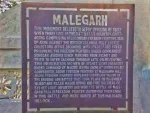
The encounter remembered at Malegarh took place on 18 December 1857. A force of British troops belonging to the Sylhet Light Infantry, commanded by Major Byng, moved towards Latu after receiving information about the approaching rebel sepoys. Historical accounts differ slightly on the number of soldiers involved, but commonly describe approximately 200 to 300 rebel troops and a smaller British-led force.
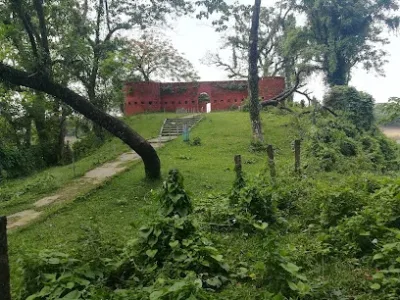
The confrontation took place around the Malegarh hillock, near Latu. The rebel soldiers reportedly took positions on the elevated ground and exchanged fire with the advancing British troops. The engagement was fierce, and Major Byng was among those killed. Accounts also record the deaths of other British soldiers and 26 Indian rebel sepoys.
The battle is remembered locally as the Battle of Latu or the Battle of Malegarh. It is particularly significant because it connects the history of the 1857 revolt with a specific location in present-day Assam. The encounter also demonstrates how the uprising extended beyond the major centres usually associated with the revolt and reached the northeastern frontier.
Malegarh Burial Ground and War Memorial
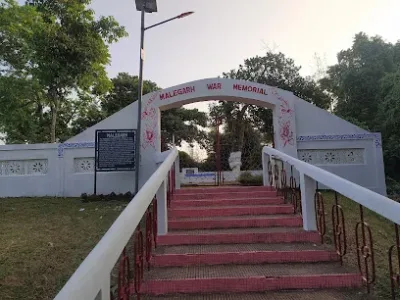
The hillock at Malegarh became the resting place of soldiers who died during the confrontation. The site is associated especially with the 26 Indian sepoys who lost their lives in the battle. Graves, memorial structures and plaques preserve the memory of the event and help visitors understand why this otherwise quiet location holds historical importance.
The memorial is often referred to by different names, including Malegarh Burial Site, Malegarh Crematorium, Malegarh Tila and Malegarh War Memorial. These names are used in local descriptions and travel references for the historic hillock and its associated memorial area.
Historical accounts also mention objects such as swords, a pistol, footwear and ammunition in connection with the site. These references add to the interest surrounding Malegarh, although visitors should not assume that such artefacts are currently displayed or accessible. The memorial's primary value lies in its association with the soldiers and the events of 1857.
What to See at Malegarh
1. Historic Burial and Cremation Site: The most important feature is the memorial area associated with the soldiers who died during the Battle of Latu. Visitors can spend time understanding the site's history and paying their respects.
2. Memorial Plaques and Inscriptions: Stone and marble plaques at the site are described in local references as carrying information about the battle. Read the inscriptions to learn about the historical events and the soldiers commemorated here.
3. Malegarh Tila: The hillock itself is an important part of the story. Its elevated position is associated with the defensive location taken by the rebel sepoys during the confrontation.
4. Sepoy Mutiny Points: Travel references also identify nearby locations as Malegarh-Sepoy Mutiny Point-1 and Malegarh-Sepoy Mutiny Point-2. These are associated with the wider battlefield landscape and can be considered by visitors interested in exploring the historical surroundings. Confirm local access before visiting them.
5. Borderland Landscape: Malegarh's location near the international border gives the surrounding area a distinctive geographical setting. Visitors should remain within permitted areas and follow instructions from local authorities and border security personnel.
Historical and Cultural Importance of Malegarh
Malegarh is an important reminder that the Revolt of 1857 was not limited to the better-known centres of northern and central India. The events at Latu connect the Barak Valley and the wider Northeast with the struggle against British rule. The soldiers who marched from Chittagong and confronted the British force at Malegarh represent the wider reach of resistance during that period.
The site also has value for local history, heritage education and responsible tourism. Preserving the graves and inscriptions helps future generations learn about the region's past. Commemorative activities and local heritage initiatives have contributed to keeping the memory of the battle alive. Visitors can support this heritage by treating the memorial respectfully and avoiding damage to its structures.
Best Time to Visit Malegarh War Memorial
The cooler and drier months from October to March are generally more comfortable for visiting Malegarh. The weather is usually more suitable for road travel and spending time outdoors. Winter also makes it easier to explore the hillock and surrounding area.
A visit may be possible at other times of the year, but heavy monsoon rain can make local roads and outdoor areas difficult to access. As Malegarh is situated close to the India-Bangladesh border, daylight visits are advisable. Plan to arrive during the day and check local access arrangements before travelling.
How to Reach Malegarh from Guwahati
By Road: Guwahati is the main starting point for visitors travelling from other parts of Assam. Travel towards the Barak Valley through the road network connecting southern Assam, then continue towards Sribhumi and Latu. From Sribhumi town, local transport can be arranged for the onward journey to the memorial. Check the latest route and road conditions before departure, as travel time depends on the chosen route and traffic.
By Train: Visitors can take a train from Guwahati towards Badarpur or the Sribhumi region. Badarpur Junction is an important railway connection for southern Assam. From the station, continue by taxi, bus or other available local transport towards Latu.
By Air: Silchar Airport, also known as Kumbhirgram Airport, is the nearest practical airport for many visitors travelling to the Barak Valley. From the airport, hire a vehicle or arrange onward road transport towards Sribhumi and Latu.
Local Transport: Government buses and local transport services are mentioned in travel references for this area. Auto-rickshaws and hired vehicles may also be available, depending on the location and time of travel. Confirm the final approach to Malegarh with local residents or authorities.
Visitor Information and Travel Tips
Malegarh is a historical memorial rather than a developed commercial tourist complex. Visitors should not expect extensive visitor facilities, restaurants or accommodation directly at the site. Keep the visit focused on the memorial and its historical significance.
The supplied visitor information describes entry as free and the site as accessible throughout the day. However, because Malegarh is close to the international border, access and movement may be subject to local security instructions. Do not treat the stated 24-hour availability as permission for unrestricted night visits. Daylight hours are recommended, and visitors should carry valid identification if required by local authorities.
Wear comfortable footwear, carry drinking water and avoid littering. Do not touch, remove or disturb any memorial object, grave or historical structure. Photography should be undertaken respectfully and in accordance with local restrictions.
A Meaningful Heritage Stop in Southern Assam
Malegarh War Memorial deserves attention as a place connected with the 1857 uprising in Northeast India. Its hillock, graves and memorial inscriptions preserve the memory of soldiers who took part in the Battle of Latu. A visit offers more than sightseeing: it provides an opportunity to reflect on the region's contribution to India's history and to recognise the importance of protecting lesser-known heritage sites. For travellers exploring Sribhumi and the Barak Valley, Malegarh is a worthwhile historical stop for understanding a significant chapter of the past.