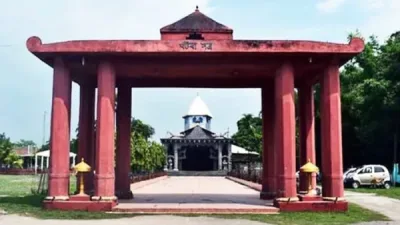
In Depth
The history of Khatara Satra is connected with the spread of Neo-Vaishnavism in Darrang. Gobinda Ata initially travelled through different parts of the region before establishing his religious activities near the Nonoi River. Local traditions associate the name Khatara with the transformation of people who were once regarded as having a difficult or harmful nature. Through the influence of Gobinda Ata and his followers, they are said to have embraced the principles of Nav-Vaishnavism, giving rise to the name Khatara.
The Satra developed with the support of the Koch rulers. During the reign of Maharaja Naranarayan, the institution received royal patronage, including exemption from certain taxes. Later Koch rulers also contributed to its development. One of its important historical records is the Borkakot, a document written on tree bark in Old Assamese Kaitholi script. Measuring approximately 196 cm in length and 24 cm in width, it records information related to royal grants, donations and the possessions associated with the Satra. Another traditional record known as Barfali is also preserved as part of the institution's historical heritage.
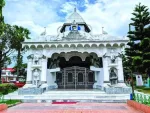
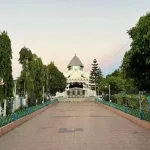
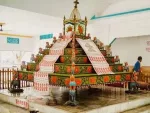
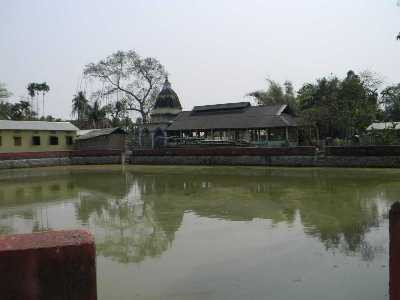
Khatara Satra is particularly important for the preservation of Assamese Vaishnavite traditions. Its activities are associated with naam-kirtan, devotional music, Sattriya cultural practices, bhaona and other traditional forms of religious and artistic expression. The Namghar and other spaces within the Satra provide an opportunity to understand how religion, performing arts and community traditions developed together in Assam.
One of the most distinctive features of Khatara Satra is its administrative system. Unlike many other major satras, it does not traditionally function under a hereditary Satradhikar. Its affairs are managed through a governing or managing committee, with local religious representatives participating in its activities. This makes its institutional structure an interesting part of the cultural history of Darrang.
The most prominent celebration associated with Khatara Satra is the Pacati festival. The festival is traditionally held around the transition from the Assamese months of Bhad to Ahin and is known for devotional rituals, naam-kirtan, music, dance and Dadhimanthan performances. During the celebration, devotees take part in rituals involving the Bhagawat, devotional singing and dramatic presentations featuring characters associated with Krishna traditions. A large fair is also organised around the festival, bringing together devotees, visitors, local traders and artisans.
The Dadhimanthan performance is one of the major cultural attractions of Pacati. Traditional performers portray characters such as Bal Krishna, Yashoda, Rohini and Gopinis, accompanied by devotional songs and instruments. The presentation combines religious storytelling, music, acting and traditional craftsmanship, making the festival an important example of Assam's living cultural heritage.
Apart from Pacati, Khatara Satra observes several other religious and cultural occasions, including Nando-utsav, Holi or Fakuwa, Buka Bhaona, Deoul and the observance of the tithis associated with Srimanta Sankardev, Sri Madhavdev and Gobinda Ata. Bhagawat readings, devotional singing and traditional musical performances are also conducted at different times.
Visitors interested in the history of Assam can explore the Satra's religious environment, learn about the spread of Ekasarana Nam Dharma in Darrang, observe traditional Assamese devotional practices and experience the cultural atmosphere of a historic satra. The surrounding rural landscape also provides a peaceful setting away from the busy urban areas.
Khatara Satra can be visited throughout the year, although the cooler months from October to March are generally more comfortable for travelling around Darrang. Visitors who want to experience the Satra at its most vibrant may plan their trip around the Pacati festival, subject to the festival calendar for that year.
How to Reach Khatara Satra from Guwahati?
From Guwahati, Khatara Satra can be reached by road through the northern Assam route towards Mangaldai and Sipajhar. The journey can be made by private car, taxi or bus. From Mangaldai, the Satra is approximately 20-22 km away. It is also located close to Sipajhar and can be approached through the local road network from the Sipajhar side.
For visitors travelling by train, Mangaldai is a useful nearby town from which local taxis and other road transport can be arranged. Guwahati is the nearest major transportation hub for visitors arriving from other parts of India.
Where to Stay at Khatara Satra?
Khatara Satra is primarily a religious and cultural institution rather than a commercial accommodation facility, so visitors should plan to stay in nearby Mangaldai or other convenient towns in Darrang. Mangaldai provides hotels, guesthouses, restaurants and other basic travel facilities. Visitors travelling from Guwahati can also make Khatara Satra part of a day trip.
Quick Info about Khatara Satra
| Information | Details |
|---|---|
| Name | Khatara Satra |
| Location | Khatara, Darrang, Assam |
| District | Darrang |
| Nearest Town | Mangaldai |
| Distance from Mangaldai | Approximately 20-22 km |
| Nearby Town | Sipajhar |
| Established | 1568 AD |
| Founder | Gobinda Ata |
| Religious Tradition | Ekasarana Nam Dharma / Vaishnavism |
| Historical Patron | Koch King Maharaja Naranarayan |
| Major Festival | Pacati Festival |
| Famous Cultural Practice | Dadhimanthan, Naam-Kirtan, Bhaona |
| Important Historical Record | Borkakot |
| Best Time to Visit | October to March |
| Guwahati Connectivity | Road via Mangaldai/Sipajhar |
| Accommodation | Hotels and guesthouses in Mangaldai and nearby areas |
| Suitable For | History, religion, culture and heritage tourism |
FAQs about Khatara Satra
1. Where is Khatara Satra located?
Khatara Satra is located at Khatara village in the Darrang district of Assam, near Sipajhar and approximately 20-22 km from Mangaldai.
2. When was Khatara Satra established?
Khatara Satra was established in 1568 AD during the reign of Koch king Maharaja Naranarayan.
3. Who founded Khatara Satra?
Khatara Satra was founded by Gobinda Ata, also known as Sri Sri Gobinda Ata or Lechakonia Gobinda Ata, a disciple of Sri Madhavdeva.
4. Why is Khatara Satra famous?
Khatara Satra is famous for its long Vaishnavite history, religious traditions, Assamese cultural heritage, traditional performances and the annual Pacati festival.
5. What is the Pacati festival at Khatara Satra?
Pacati is a major traditional festival of Khatara Satra featuring naam-kirtan, devotional rituals, music, dance, bhaona and Dadhimanthan performances, along with a local fair.
6. What is the Borkakot of Khatara Satra?
The Borkakot is a historic document written on tree bark in Old Assamese Kaitholi script. It contains records connected with royal patronage, donations and the historical possessions of the Satra.
7. Does Khatara Satra have a Satradhikar?
Khatara Satra is notable for its administrative system and is traditionally managed by a governing or managing committee rather than a hereditary Satradhikar.
8. How far is Khatara Satra from Mangaldai?
Khatara Satra is approximately 20-22 km from Mangaldai town, making it convenient to visit by road.
9. What is the best time to visit Khatara Satra?
October to March is generally a comfortable period to visit because of the more pleasant weather. Visitors interested in cultural celebrations can plan around the Pacati festival.
10. How can I reach Khatara Satra from Guwahati?
Khatara Satra can be reached from Guwahati by road via the Mangaldai and Sipajhar region. Visitors can use a private vehicle, taxi or bus and then take local transport to the Satra.