In Depth
The origins of Burhi Gosani worship are linked to the Jaintia kingdom of present-day Meghalaya. During the reign of Ahom king Rudra Singha, the goddess was brought from the Jaintia Hills to Assam after a major military campaign. According to tradition, the deity appeared in a dream and instructed the Ahom commander to bring her sacred image and yoni from a site near the Burhi River, which led to the name Burhi Gosani.
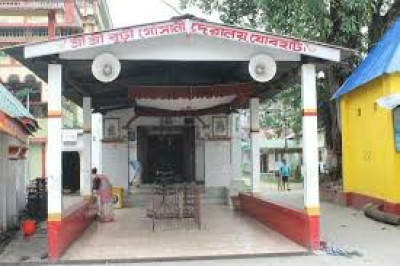
Initially, the deity was established at Gargaon, the Ahom capital, where daily rituals were conducted and offerings were sent to the royal household. When the Ahom capital shifted to Rangpur and later to Jorhat, the goddess was ceremonially moved along with the royal family. In 1794, Ahom monarch Gaurinath Singha formally established the Burhi Gosani Devalaya in Jorhat, making it one of the most prominent Shakti centers in Upper Assam.
Historically, the temple followed traditional Shakta rituals, including animal sacrifice, which was part of ancient worship practices. The royal family maintained close spiritual ties with the deity, often carrying the goddess during journeys outside the capital. Over time, political turmoil, the Moamoria rebellion, and the Burmese invasions caused severe damage to temple properties and records. The original land grants and copper plates were lost during these invasions, and the shrine had to rely on public donations for survival.
With the support of Raibahadur Radhakanta Handique, the present land was acquired from the government. The last Ahom king, Purandar Singha, built a temporary structure for worship, which was later replaced by a permanent temple constructed through community contributions. Although an earlier building collapsed during an earthquake, the shrine was rebuilt and continues to thrive as a major religious center.
The priestly lineage of Burhi Gosani Devalaya traces back to a family named Sanatana, brought from the Jaintia kingdom along with the deity. Their descendants still perform daily rituals, carrying the traditional title of Pujaghariya Baruah, bestowed by the Ahom kings after a brief period of administrative change.
Today, Burhi Gosani Devalaya is best known for its grand Durga Puja celebrations, which attract thousands of devotees from across Assam. During this festival, the temple becomes the spiritual heart of Jorhat, filled with devotional chants, rituals, and cultural vibrancy. The shrine represents the deep-rooted tradition of Shaktism in the Brahmaputra Valley, where goddess worship has flourished since ancient times, alongside famous centers like Kamakhya, Ugratara, and Dirgheswari.
Beyond its religious significance, Burhi Gosani Devalaya also holds immense historical value. It reflects the cultural assimilation between the Ahom and Jaintia traditions and preserves centuries-old tantric and Shakta worship practices. The temple continues to serve as a living heritage site, connecting modern Assam with its royal and spiritual past.
How to Reach Burhi Gosani Devalaya, Jorhat
By Air: Rowriah Airport, Jorhat, is about 7 km from the temple. Taxis and auto-rickshaws are easily available from the airport.
By Train: Jorhat Town Railway Station and Mariani Junction connect the city with Guwahati, Dibrugarh, and other major towns. The temple is a short drive from both stations.
By Road: Jorhat is well connected by NH-37 and state highways. Regular buses, shared taxis, and private cabs operate from Guwahati, Sivasagar, Golaghat, and Dibrugarh.
Best Time to Visit Burhi Gosani Devalaya
The best time to visit is between October and March, when the weather is pleasant. The most vibrant time is during Durga Puja (September-October), when the temple hosts its grand annual festival and draws large crowds of devotees.
Where to Stay in Jorhat
Jorhat offers a wide range of accommodation options, including budget hotels, mid-range lodges, and comfortable business-class hotels near Gar Ali and the city center. Popular areas to stay include Gar Ali Road, Baruah Chariali, and near Jorhat Airport for easy connectivity.
Quick Info Table on Burhi Gosani Devalaya
| Feature | Details |
|---|---|
| Name | Burhi Gosani Devalaya |
| Location | Dewal Road, Gar Ali, Jorhat, Assam |
| Deity | Burhi Gosani (Form of Goddess Durga) |
| Built By | Ahom King Gaurinath Singha |
| Year Established | 1794 |
| Religious Tradition | Shaktism |
| Major Festival | Durga Puja |
| Best Time to Visit | October to March |
| Nearest Airport | Jorhat Airport (7 km) |
| Nearest Railway Station | Jorhat Town / Mariani Junction |
FAQs on Burhi Gosani Devalaya
1. What is Burhi Gosani Devalaya famous for?
Burhi Gosani Devalaya is famous for being one of the most important Shakti temples in Assam and for its grand Durga Puja celebrations in Jorhat.
2. Where is Burhi Gosani Devalaya located?
The temple is located on Dewal Road near Gar Ali in Jorhat town, Assam.
3. Who built Burhi Gosani Devalaya?
The temple was formally established in Jorhat in 1794 by Ahom king Gaurinath Singha.
4. Which goddess is worshipped at Burhi Gosani Temple?
The temple is dedicated to Burhi Gosani, a form of the Mother Goddess, later identified with Goddess Durga.
5. What is the historical origin of Burhi Gosani?
The idol was originally worshipped by the Jaintia kings and was brought to Assam by Ahom king Rudra Singha.
6. When is the best time to visit Burhi Gosani Devalaya?
October to March is ideal, especially during Durga Puja when the temple hosts its largest celebrations.
7. Is Burhi Gosani Devalaya associated with the Ahom dynasty?
Yes, the temple has strong historical connections with Ahom rulers, who patronized and protected its worship traditions.
8. Are there accommodation facilities near Burhi Gosani Temple?
Yes, Jorhat has many hotels and guesthouses near the temple and city center.
9. Does Burhi Gosani Devalaya allow daily worship?
Yes, daily rituals and prayers are performed throughout the year by hereditary priests.
10. Why is Burhi Gosani Devalaya important in Assamese culture?
The temple represents the ancient Shakta tradition of Assam and symbolizes cultural integration between Ahom and Jaintia religious practices.