In Depth
Batadrava Than is not merely a pilgrimage destination but a living spiritual institution that shaped the religious, social, and cultural identity of Assamese society. Devotees believe this holy place to be Dwitiya Vaikuntha, meaning the second heaven on earth.
Historical Importance of Batadrava Than
The word Than in Assamese refers to a sacred place and originates from the Sanskrit word Sthan. During the lifetime of Srimanta Sankardeva, the term Satra was not used. Instead, he himself referred to this institution as a Than or Dham.
Batadrava Than was founded by Srimanta Sankardeva after his return from his first pilgrimage in 1494 AD. This site became the first institutional center for the systematic propagation of Eka Sarana Nama Dharma, a monotheistic devotional movement centered on Lord Krishna as the supreme deity.
Sankardeva established the first Kirtanghar (Namghar) here, where congregational prayer, devotion, and recitation of the Bhagavata Purana were practiced. Later, the Monikut, Cari-Hati (four residential clusters), and other essential structures were added, forming a complete Than complex by 1509 AD.
Religious Philosophy and Practices
At the core of Batadrava Than lies the philosophy of Eka Deva, Eka Seva, Eka Biney Nahi Kewa, which emphasizes devotion to one God alone. Sankardeva rejected idol worship, animal sacrifice, and unnecessary rituals prevalent at the time.
In the Monikut, the Simhasana (Guru Asana) holds the sacred scripture Bhagavata Purana without any idol, symbolizing the pure devotional path. Regular Nama Prasanga, Bhajan, and Kirtan continue uninterrupted even today, preserving a tradition that began more than five centuries ago.
Sacred Features and Structures
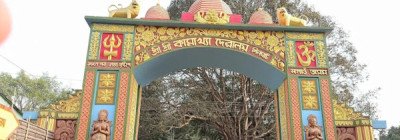
Batadrava Than covers an area of approximately 16 bighas, enclosed by a protective brick wall and accessed through two entrances known as Batchora.
Key structures within the Than include:
-
Kirtanghar: The central prayer hall measuring about 180 feet long and 85 feet wide
-
Manikut: Repository of sacred texts and manuscripts
-
Natghar, Alohighar, Sabhaghar, Rabhaghar
-
Doul Mandir for Doul Mohotsava celebrations
-
Aakashi Ganga and Santijan Pukhuri, sacred ponds
-
Mini Museum showcasing historical artifacts
A sacred Shilikha (Myrobalan) tree, under which Sankardeva composed many of his works, still stands near the Kirtanghar and draws devotees from across the world.
Festivals and Cultural Significance
The most celebrated festival at Batadrava Than is Doul Mohotsava (Holi), which attracts over a lakh devotees every year from Assam and Northeast India. Other important observances include birth and death anniversaries of Vaishnavite saints.
Batadrava Than has been a guiding force behind the Namghar culture that defines Assamese village life even today.
Management and Administration
The management of Bordowa Than is carried out through a democratically elected committee under the guidance of the Sattradhikar. Various appointed functionaries assist in religious and administrative duties, including:
-
Bar Bhagavati
-
Bar Pathak
-
Bar Namlogowa
-
Deuri
-
Bar Gayana and Bar Bayana
-
Oja and Sarvani
List of Sattradhikars
Narowa Satra Sattradhikars:
-
Ram Deva
-
Bhadra Deva
-
Lakshmi Deva
-
Bhagirati
-
Bangshi Deva
-
Puma Chandra Deva Goswami
-
Devananda Deva Goswami
Salaguri Satra Sattradhikars:
-
Ram Carana
-
Krishnakanta
-
Bhadra Kanta
-
Yadu Kanta
-
Nabakanta
-
Bhogeswar
-
Leeladhar
-
Dharma Chandra
-
Bhava Chandra
-
Arabinda
-
Sumeswar Deva
-
Paramananda Mahanta
How to Reach Bordowa Satra
Best Time to Visit
The best time to visit Bordowa Satra is from October to March, when the weather is pleasant. Visiting during Doul Mohotsava offers a deeply immersive spiritual experience.
Where to Stay
Accommodation facilities include Assam Tourism cottages and dormitories within the Than campus. Nagaon town also offers budget hotels and guesthouses for visitors.
Quick Info Table on Bordowa Satra (Batadrava Than)
| Detail | Information |
|---|---|
| Name | Bordowa Satra / Batadrava Than |
| Location | Nagaon, Assam |
| Founded | 1494 AD |
| Founder | Srimanta Sankardeva |
| Religion | Eka Sarana Nama Dharma |
| Area | 16 Bighas |
| Major Festival | Doul Mohotsava |
| Nearest Town | Nagaon |
| Nearest Airport | Guwahati |
| Official Website | www.bordowathan.org |
FAQs on Bordowa Satra (Batadrava Than)