In Depth
Declared a National Park on 13 April 1999, Orang was earlier notified as a Game Reserve in 1915, later upgraded to a Wildlife Sanctuary in 1985, and briefly named Rajiv Gandhi Wildlife Sanctuary in 1992. The park spreads across a core area of 279.60 sq. km, while the total area of the Orang Tiger Reserve, including the buffer, extends to 504.23 sq. km.
Park Area and Location Details
-
Core Area: 279.60 sq. km
-
Buffer Area: 224.63 sq. km
-
Total Area: 504.23 sq. km
-
Latitude: 26°29' N to 26°40' N
-
Longitude: 92°15' E to 92°27' E
-
Address: Orang National Park, Silbori, Darrang, Assam
Core Area: 279.60 sq. km
Buffer Area: 224.63 sq. km
Total Area: 504.23 sq. km
Latitude: 26°29' N to 26°40' N
Longitude: 92°15' E to 92°27' E
Address: Orang National Park, Silbori, Darrang, Assam
Orang National Park forms the core area of the Orang Tiger Reserve and is one of the few protected areas on the north bank of the Brahmaputra that supports a stable population of one-horned rhinoceros.
Wildlife Diversity at Orang National Park
Despite its relatively smaller size, Orang National Park is a biodiversity hotspot and an Important Bird and Biodiversity Area (IBA) as recognized by BirdLife International.
Major Mammals:
-
Great Indian One-Horned Rhinoceros (around 65–70 individuals)
-
Royal Bengal Tiger (around 18–20 individuals)
-
Asiatic Elephant
-
Leopard
-
Sambar Deer
-
Hog Deer
-
Barking Deer
-
Wild Boar
-
Pygmy Hog (critically endangered)
-
Gangetic River Dolphin
-
Indian Pangolin
-
Fishing Cat and Leopard Cat
Great Indian One-Horned Rhinoceros (around 65–70 individuals)
Royal Bengal Tiger (around 18–20 individuals)
Asiatic Elephant
Leopard
Sambar Deer
Hog Deer
Barking Deer
Wild Boar
Pygmy Hog (critically endangered)
Gangetic River Dolphin
Indian Pangolin
Fishing Cat and Leopard Cat
Birdlife:
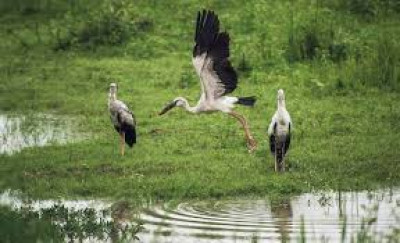
With more than 220 recorded bird species, Orang National Park is a paradise for bird watchers.
-
Bengal Florican (threatened species)
-
Greater and Lesser Adjutant Storks
-
Black-necked Stork
-
Spot-billed Pelican
-
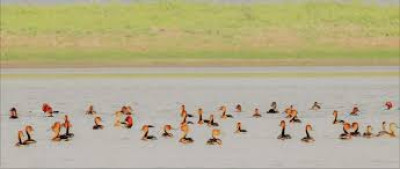
Ruddy Shelduck, Pintail, Gadwall, Mallard
-
Hornbills, Green Pigeon
-
Rare migratory birds including American White Pelican
Reptiles and Aquatic Life:
-
Indian Rock Python, King Cobra, Black Krait, Cobra
-
Monitor Lizards and Otters
-
7 species of turtles and tortoises
-
Over 50 species of freshwater fish
Indian Rock Python, King Cobra, Black Krait, Cobra
Monitor Lizards and Otters
7 species of turtles and tortoises
Over 50 species of freshwater fish
Safari Zones, Timings, and Visitor Information
Orang National Park offers both jeep safaris and elephant safaris, providing visitors an opportunity to explore the dense grasslands and wetlands safely.
-
Safari Timings: Morning and Afternoon sessions
-
Elephant Safari: Preferred for close wildlife sightings
-
Entry Permit: Mandatory and issued by the Divisional Forest Officer, Mangaldoi Wildlife Division
Safari availability depends on weather conditions and forest department regulations.
Climate and Rainfall
-
Pre-Monsoon (March–May): Temperature: 20°C to 32°C, Rainfall: Around 400 mm
-
Monsoon (June–September): Temperature: 23°C to 36°C, Rainfall: Around 1100 mm High humidity and flooding are common
-
Retreating Monsoon (October–November): Temperature: 16°C to 29°C, Rainfall: Around 120 mm
-
Winter (December–February): Temperature: 7°C to 25°C, Cool and foggy mornings
Best Time to Visit Orang National Park
The best time to visit Orang National Park is from November to April, when the weather is pleasant and wildlife sightings are frequent. The park generally remains closed during peak monsoon months due to flooding.
How to Reach Orang National Park
By Air:
-
Salonibari Airport, Tezpur – approximately 10 km
-
Guwahati Airport – approximately 140 km
By Rail:
-
Nearest railway stations: Salonibari and Rangapara
-
Well connected to Guwahati and major Assam towns
By Road:
-
Connected via NH 52
-
Easily accessible from Tezpur (32 km)
-
Frequent buses and private taxis are available
Where to Stay Near Orang National Park
-
Forest Dormitory: Available near the park gate for group stays (up to 40 people, without bedding and food)
-
Forest Department Tourist Lodge: Accommodates up to 16 people (prior booking required)
-
Nearby Accommodation: Several hotels and guest houses are available in Tezpur, which serves as the primary base for visitors
Some Important Contact :
1) Divisional Forest Officer, Mangaldoi Wildlife Division, Mangaldai, Darrang, Tel.: +91 3713 - 230022
2) Range Forest Officer, Rajiv Gandhi Orang National Park, Silbori, Tel.: +91 3712 282379.
Why Visit Orang National Park
Orang National Park offers an untouched, peaceful wildlife experience away from heavy tourist crowds. Its ecological importance, rare species, rich birdlife, and scenic Brahmaputra floodplains make it a must-visit destination for wildlife lovers, photographers, and nature enthusiasts.
Quick Info Table on Orang National Park
FAQs on Orang National Park