Detailed Notes
Socio-Economic Importance of Bamboo in Assam
India possesses one of the richest bamboo resources in the world, accounting for nearly 12.8 percent of the total forest cover, and Assam forms a significant part of this natural wealth. The North East Region alone stores about 66 percent of India's bamboo resources, highlighting the strategic importance of Assam in bamboo-based development.
Bamboo Resources and Distribution in Assam
Assam records around 38 naturally growing bamboo species, with several species showing restricted or localized distribution. Some species such as Bambusa mastersii are confined to Dibrugarh district, while Bambusa cacharensis, Dinochloa compactiflora, and Dinochloa indica are mainly found in the Barak Valley. Species like Chimonobambusa griffithiana and Oxytenanthera parviflora are restricted to the hills of Dima Hasao and Karbi Anglong.
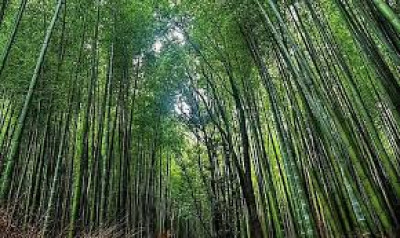
Unlike many forest types, exclusive bamboo forests are rare in the plains of Assam. Bamboo groves are commonly found along the edges of reserve forests, while pure bamboo forests dominated by Melocanna baccifera and Chimonobambusa griffithiana occur in the hill districts of Dima Hasao and Karbi Anglong.
Bamboo is extensively cultivated across Assam, and almost every rural household grows bamboo in its bari land (homestead). Commonly cultivated species include Bambusa balcooa (Bhaluka bamboo), Bambusa tulda (Jati bamboo), Melocanna baccifera (Muli bamboo), Dendrocalamus hamiltonii (Koko bamboo), and Dendrocalamus giganteus (Mokalm bamboo).
Economic Importance of Bamboo in Assam
Bamboo is a raw material of great versatility and forms the backbone of many rural and small-scale industries in Assam. Economically important species such as Muli, Dalu, Khang, Kaligoda, and Pecha are widely used for pulping, construction, fencing, basketry, mat making, and handicrafts. Among these, Muli bamboo and Dalu bamboo have major commercial importance, especially in the pulp, paper, mat, and basket industries.
Assam hosts two large paper mills that depend heavily on bamboo as raw material. In addition, there are thousands of MSMEs engaged in producing bamboo blinds, flooring, roofing materials, incense sticks, furniture, and handicraft items. These enterprises generate substantial rural employment and provide supplementary income to tribal and marginal communities.
Bamboo-based cottage and small-scale industries require low capital investment, making them ideal for self-employment and entrepreneurship in rural Assam.
Social and Cultural Importance of Bamboo in Assam
Bamboo forms an integral part of Assamese culture and lifestyle. It is used extensively in rural housing, fencing, agricultural implements, fishing equipment, furniture, musical instruments, baskets, toys, hand-fans, and household articles. Traditional bamboo craftsmanship reflects the creativity and cultural identity of various ethnic communities in Assam.
Bamboo also plays an important role in food and nutritional security. Bamboo shoots are widely consumed in Assam and are valued for being low in fat, high in dietary fiber, and rich in minerals. Tribal communities use bamboo for food, shelter, medicine, and ethno-religious purposes.
Industrial and Modern Uses of Bamboo in Assam
In modern times, bamboo has emerged as a sustainable alternative to timber and steel. Bamboo products such as plywood, flooring, roofing sheets, props, and panels are increasingly used in construction. Research studies in India are exploring the use of bamboo as a reinforcement material in light concrete structures, highlighting its future industrial potential.
Bamboo is also used in medicine, charcoal production, vinegar, natural pesticides, beverages, cosmetics, toothpaste, soaps, and food preservatives. Bamboo leaves and shoots contain valuable compounds with anti-oxidant, anti-bacterial, and anti-aging properties, making bamboo a significant resource in healthcare and food industries.
Environmental Importance of Bamboo in Assam
Apart from its economic value, bamboo contributes significantly to carbon sequestration, biodiversity conservation, and soil protection. Being fast-growing and renewable, bamboo supports sustainable development and climate-resilient livelihoods. It is one of the most environment-friendly resources available in Assam.
Bamboo Found in Assam: Locality and Vernacular Name
| Sl. No. | Scientific Name | Vernacular Name | Locality |
|---|---|---|---|
| 1 | Bambusa auriculata | Kalia bans | Karimganj |
| 2 | Bambusa balcooa | Bhaluka | Throughout the State |
| 3 | Bambusa bambos | Kotoha, Kotabanh | Throughout the State |
| 4 | Bambusa cacharensis | - | Lakhimpur, Sultani-Cherra Village |
| 5 | Bambusa jaintiana | - | Dima Hasao |
| 6 | Bambusa mastersii | Beti banh | Lakhimpur, Dibrugarh |
| 7 | Bambusa nutans | Deobanh, Jotia maka | Throughout the State |
| 8 | Bambusa pallida | Bijuli, Jowa, Makal | Throughout the State |
| 9 | Bambusa polymorpha | Betua, Jama | Cachar, Dholai, Kakicherra, Silchar |
| 10 | Bambusa pseudopallida | - | - |
| 11 | Bambusa sp. | Nangal banh | Kamrup, Gohpur |
| 12 | Bambusa teres | Bhaluki makal, Paura | Chariduar, Darrang, Kamrup, Sibsagar |
| 13 | Bambusa tulda | Jati, Nal banh | Throughout the State |
| 14 | Bambusa vulgaris | Tanshi banh, Ketura | Karimganj |
| 15 | Bambusa arundinacea | Kata banh | Lakhimpur, Dibrugarh, Upper Dihing |
| 16 | Dendrocalamus giganteus | Worra | North Lakhimpur, Upper Dihing |
| 17 | Dendrocalamus hamiltonii | Kakoa, Kakeo banh | Dima Hasao, Karbi Anglong, Nagaon, Cachar |
| 18 | Dendrocalamus longispathus | Karail, Jati, Rupahi banh | Dima Hasao, Kamrup, Dholai |
| 19 | Dendrocalamus strictus | Karail, Jati | Deopani river bank |
| 20 | Dinochloa compactiflora | - | Cachar |
| 21 | Dinochloa gracilis | - | Dima Hasao |
| 22 | Dinochloa indica | - | Bhuban Hills |
| 23 | Dinochloa mclellandii | Lota | Dima Hasao, Karimganj |
| 24 | Gigantochloa | Kalisundi | Karimganj |
| 25 | Gigantochloa macrostachys | - | Hathikhali, Kamrup, Kulsi |
| 26 | Melocanna baccifera | Tarai banh, Muli banh | Hill districts |
| 27 | Phyllostachys assamica | - | - |
| 28 | Schizostachyum dullooa | Dalu banh | Common in hilly areas and Upper Assam |
| 29 | Schizostachyum griffithii | Behti banh | Sibsagar, Dibrugarh |
| 30 | Schizostachyum pergracile | Madang | Dibrugarh, Dima Hasao |
| 31 | Schizostachyum polymorphum | Bajal banh, Bajah banh | Barduar, Darrang RF, Garampani, Makum, Narduar, Joypur |
| 32 | Oxytenanthera parviflora | Hill Jati | Dima Hasao, Karbi Anglong |
| 33 | Dendrocalamus longispathus | Khang | - |
| 34 | Oxytenanthera nigrociliata | Kaligoda | - |