Detailed Notes
This historic sighting marks a major ornithological milestone for the UNESCO World Heritage Site and highlights the growing importance of Kaziranga's wetlands in global bird conservation.
Historic First Sighting in Kaziranga
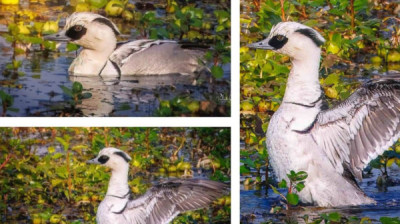
The Smew was observed at the Rowmari-Donduwa beels located in the Laokhowa buffer zone of the Kaziranga Tiger Reserve. The official census report, released on February 25, 2026, confirmed the presence of this rare Eurasian diving duck in Assam for the first time.
The species quickly became the star attraction of the 7th Kaziranga Waterbird Count, which documented more than 1.05 lakh waterbirds across the park’s wetlands. The sighting surprised birdwatchers, forest officials, wildlife photographers, and researchers because the Smew is rarely seen in South Asia.
About the Smew (Mergellus albellus)
The Smew is a small but visually striking diving duck that breeds in the cold freshwater lakes and forested wetlands of the Eurasian taiga across northern Europe and Asia. During the breeding season, it prefers remote, tree-lined lakes.
Adult males are easily recognisable due to their bright white plumage with bold black markings and a distinctive black mask. Females, on the other hand, display mottled brown plumage with softer facial markings.
The species is a winter migrant and typically moves to relatively warmer regions of Europe and East Asia during harsh winters. In India, sightings are extremely rare and usually limited to northern and central wetlands. Previous records have come from Haiderpur in Uttar Pradesh and areas around Corbett. The bird prefers fish-rich, sheltered freshwater bodies and is generally seen alone or in small flocks.
Globally, the Smew population is estimated at around 1.3 lakh mature individuals. Although not currently classified as critically endangered, its numbers are gradually declining due to habitat loss, wetland degradation, and the removal of old trees used for nesting.
Kaziranga National Park: A Critical Migratory Bird Habitat
Located in Assam, Kaziranga National Park is internationally famous for its one-horned rhinoceros and thriving tiger population. However, it is also one of Northeast India’s most important migratory bird habitats.
Every winter, thousands of birds arrive from Central Asia, Siberia, Mongolia, China, and Europe to escape freezing temperatures. Kaziranga's shallow wetlands, abundant fish supply, aquatic vegetation, and safe resting grounds make it an ideal winter refuge.
During the 2026 census, commonly sighted species included the Bar-headed Goose, the Northern Pintail, and the Lesser Whistling Duck. The regular return of these species helps scientists monitor environmental stability and detect ecological imbalances.
Details of the 7th Kaziranga Waterbird Census 2026
The survey was conducted from January 4 to January 11, 2026, across 166 wetlands spread over 10 forest ranges within the park. More than 120 enumerators and 50 volunteers participated, including forest guards, senior officers, ornithologists, researchers, students, and trained volunteers.
The census was compiled by the Kaziranga Park Authority in collaboration with the Assam Bird Monitoring Network. Teams worked from early morning to sunset, as these hours are ideal for waterbird observation. Standardised protocols were followed, and tools such as binoculars, GPS devices, and cameras were used to ensure accurate data collection.
Large perennial wetlands recorded high bird populations, while seasonal wetlands contributed significantly to species diversity. The survey provides an essential baseline for assessing wetland health, habitat usage, biodiversity patterns, and conservation planning.
Climate Change and Unusual Migration Patterns
The unexpected appearance of the Smew in Assam has raised important scientific questions. Bird migration follows long-established seasonal patterns shaped over thousands of years. When a species appears outside its normal geographic range, experts investigate possible causes such as habitat destruction, food scarcity, extreme weather events, and climate shifts.
Climate change affects global temperature patterns, rainfall cycles, wind systems, snowfall levels, and seasonal timing. These changes can disrupt breeding grounds and traditional food sources, forcing birds to adjust their migration routes.
Researchers believe the Smew sighting may indicate broader climate change impacts on migratory birds. While a single observation does not confirm a permanent shift, it serves as a significant environmental signal that requires long-term monitoring.
Conservation Significance and Wetland Importance
The census also recorded several bird species listed on the IUCN Red List, including one critically endangered and another endangered species. This further strengthens Kaziranga's global conservation importance.
Wetlands are not only crucial habitats for birds. They also:
-
Reduce flood damage
-
Recharge groundwater
-
Filter pollutants
-
Store carbon
-
Support fish and aquatic plant life
Long-term surveys like the Kaziranga Waterbird Count are essential for tracking biodiversity trends and understanding the long-term effects of climate change on migration routes. Protecting wetlands ensures the survival of vulnerable species and strengthens ecological resilience.
Conclusion
The first-ever recording of the rare Smew in Kaziranga National Park during the 2026 waterbird census represents a landmark moment in Indian ornithology. Beyond its rarity, the sighting highlights the ecological importance of Assam's wetlands and reinforces the need for strong conservation strategies in the face of climate change.