Detailed Notes
Earliest Inhabitants of Assam
Archaeological and anthropological studies suggest that the earliest inhabitants of Assam were Austroasiatic communities who arrived during the Neolithic period. These early settlers introduced basic agriculture and forest-based livelihoods, leaving a lasting influence on rural and tribal life in the region.
Tibeto-Burman and Mongoloid Migrations
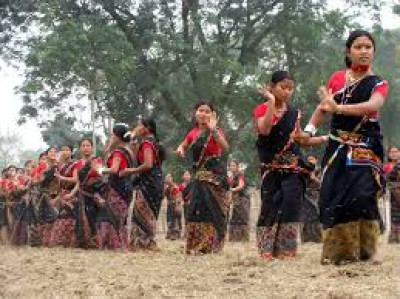
Over time, large groups belonging to the Tibeto-Burman linguistic family migrated from the Himalayan foothills and Southeast Asia. These communities, often identified with Mongoloid ancestry, include tribes such as the Bodo-Kachari, Mising, Karbi, Naga, and Mizo. Their traditions, languages, and social structures continue to form a strong foundation of Assam's indigenous culture.
Indo-Aryan Influence in the Brahmaputra Valley
Subsequent migrations from the Gangetic plains brought Indo-Aryan groups into Assam. These settlers introduced Indo-Aryan languages, religious practices, and social systems. Over centuries, their language evolved into modern Assamese, which became a unifying medium among diverse communities living in the valley.
Arrival of the Tai-Ahoms
A major turning point in Assam's history occurred with the arrival of the Tai-Ahoms in the 13th century. Originating from Southeast Asia, the Ahoms established a powerful kingdom that ruled Assam for nearly six hundred years. Rather than imposing their identity, they assimilated with local populations, blending customs and traditions, which played a vital role in shaping the Assamese ethnic identity.
Later Communities and Cultural Integration
During medieval times, Muslim settlers arrived through trade, administration, and settlement under Ahom patronage. Sikh soldiers and other groups also became part of Assam's social fabric. These communities integrated locally, contributing to Assam's linguistic, cultural, and demographic diversity.
Formation of Assamese Identity
The people of Assam, commonly known as Asomiya, emerged through a long process of assimilation among tribal, Indo-Aryan, and Tai groups. Shared language, festivals, and social practices helped unify these varied origins into a distinct regional identity.
Today, the people of Assam represent a living example of cultural harmony, where multiple ancestral roots coexist, making the region one of the richest ethnic landscapes in South Asia.