Detailed Notes
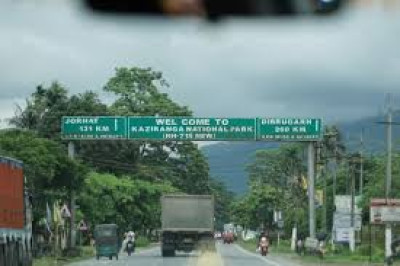
Kaziranga National Park, a UNESCO World Heritage Site, is globally renowned for its one-horned rhinoceros and diverse wildlife. The existing highway passing through this region has long posed a serious threat to animals, especially during monsoon floods when wildlife migrates toward the Karbi Anglong hills. The elevated road project seeks to resolve this long-standing conflict between infrastructure and conservation.
What is the Kaziranga Elevated Road Project?
The Kaziranga Elevated Road Project involves the construction of a long elevated highway corridor over the most ecologically sensitive section of NH-715, formerly known as NH-37. Instead of vehicles passing at ground level through wildlife corridors, traffic will move on elevated structures, allowing animals to cross freely underneath.
The project forms part of a larger plan to widen and modernize the Kaliabor to Numaligarh section of NH-715 into a four-lane highway. While the total highway length is over 85 km, the elevated portion focuses specifically on the Kaziranga stretch where wildlife movement is most intense.
Length and Project Components
Key structural elements of the project include:
-
Total project length: Approximately 85.7 km
-
Elevated corridor length: Around 34.4 to 34.5 km passing through Kaziranga National Park
-
Existing road widening: Over 30 km upgraded from two lanes to four lanes
-
Greenfield bypasses: Around 21 km near Jakhalabandha and Bokakhat
The elevated corridor has been carefully designed to pass over nine critical animal corridors, ensuring year-round and flood-season movement of elephants, rhinos, deer, and other species.
Purpose and Objectives of the Project
The Kaziranga elevated road project has multiple objectives:
-
Prevent wildlife deaths caused by vehicle collisions
-
Maintain ecological connectivity between Kaziranga and Karbi Anglong hills
-
Reduce traffic congestion on an extremely busy highway
-
Improve travel safety for commuters and tourists
-
Support sustainable tourism and economic growth in Assam
By separating animal movement and vehicular traffic vertically, the project introduces a long-term solution to human-wildlife conflict.
Cost of the Kaziranga Elevated Road Project
The total approved capital cost of the project is Rs. 6,957 crore.
This includes:
-
Civil construction costs
-
Land acquisition expenses
-
Wildlife-friendly design features
-
Environmental safeguards and monitoring
The project has been approved by the Cabinet Committee on Economic Affairs and will be executed under the Engineering, Procurement and Construction (EPC) mode by the National Highways Authority of India.
Foundation Stone and Completion Timeline
The foundation stone for the Kaziranga Elevated Road Project is expected to be laid by Prime Minister Narendra Modi in January 2026.
As of now:
-
An official completion date has not been formally announced
-
The project is considered a long-term infrastructure initiative due to its complexity and ecological sensitivity
Construction schedules will factor in strict environmental guidelines, including restrictions during the flood season.
Wildlife Protection and Environmental Measures
Wildlife conservation is the core focus of this project. Several safeguards are integrated into its design:
-
Elevated structures across all nine identified animal corridors
-
No construction activity during peak flood periods
-
Noise and pollution control mechanisms
-
Continuous monitoring of animal movement
-
Clearances from the Wildlife Institute of India and the National Board for Wildlife
These measures aim to ensure minimal disturbance to the natural habitat.
Connectivity and Regional Significance
Once completed, the upgraded NH-715 corridor will significantly enhance connectivity across Assam by linking:
-
Guwahati with Numaligarh and Jorhat
-
Major tourist destinations including Kaziranga
-
Key airports and railway stations
-
Economic and industrial hubs
The project is also expected to generate large-scale employment and stimulate tourism-driven economic growth.
Why the Kaziranga Elevated Road Project is Important?
-
Protects wildlife in one of Indias most important national parks
-
Demonstrates sustainable infrastructure planning
-
Improves road safety and travel efficiency
-
Strengthens regional connectivity in Northeast India
-
Sets a national benchmark for wildlife-friendly highways