Detailed Notes
Ancient Hindu texts and regional legends describe the river's origin as both sacred and miraculous, linking it directly to Brahma and revered sages.
1. Mythological Origin of the Brahmaputra
According to Hindu mythology, Lord Brahma was once attracted to Amogha, the wife of Sage Shantanu. Feeling ashamed of his emotions, Brahma left his seed behind, which Amogha consumed. From this divine act, a child was born in the form of water, who later became the mighty Brahmaputra River.
This water-born child was initially placed in Brahmakunda, surrounded by four sacred mountains: Kailash, Gandhamadana, Jarudhi, and Sambwartakka. As the water body expanded into a large lake, Sage Parashurama struck the banks with his axe to release it, forming the flowing river known today as the Brahmaputra.
2. Role of Sage Shantanu and Amogha
While Lord Brahma is regarded as the divine father, some traditions also recognize Sage Shantanu as a symbolic or earthly father figure because the river was born through his wife, Amogha. This dual-parentage story reflects the blending of divine and human elements in Hindu mythology.
3. Meaning and Naming of the Brahmaputra
The name Brahmaputra literally translates to 'son of Brahma' in Sanskrit. Ancient texts such as the Kalikapurana confirm this naming and narrate the river's sacred birth and release from Brahmakunda.
4. Sacred Status of the Brahmaputra
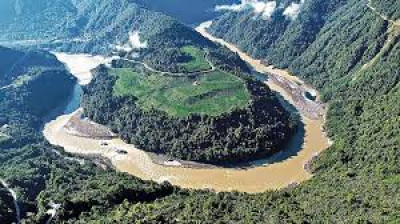
The Brahmaputra is one of the few rivers in India regarded as male and holds immense religious significance. It originates in the Himalayas, flows through Tibet, India, and Bangladesh, and is worshipped as a life-giving river that sustains millions across Northeast India.
Conclusion
The father of the Brahmaputra River is Lord Brahma, as confirmed by its name and Hindu mythology. While Sage Shantanu and Amogha are also linked to its legendary origin, Brahma remains the primary divine source. This sacred river stands apart in Indian tradition as a rare male river with a powerful mythological legacy.