Detailed Notes
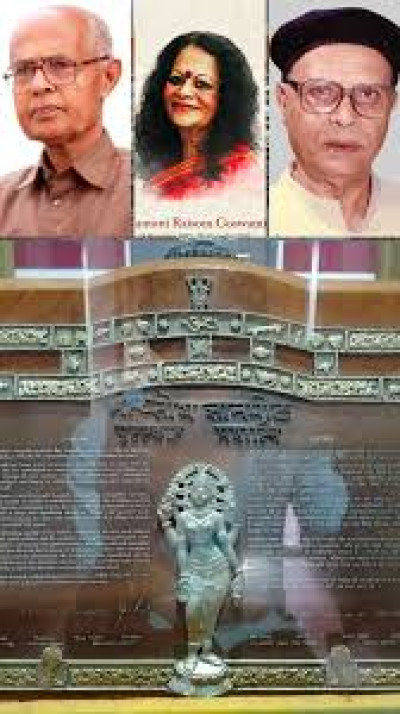
To date, three Assamese writers have received the Jnanpith Award, marking significant milestones in the state’s literary history. Their works have not only enriched Assamese literature but have also brought national and international recognition to the language and culture of Assam.
Jnanpith Award Winners from Assam
His debut novel, Rajpahte Ringiai (1957), explored the socio-political life of Assam, while Mrityunjay focused on the struggles of the Assamese people before India’s independence. Bhattacharya also excelled in short stories, with acclaimed works like Satsori and Kolong Aajiu Boi, and poetry that appeared in magazines such as Jayanti. His writing was deeply rooted in Assamese culture, history, and the human condition, making him a literary icon of the state.
Some of her most notable novels include Datal Hatir Une Khowa Howda (The Moth-Eaten Howdah of a Tusker), Hridoy, Nangoth Sohor, and Borofor Rani. Her storytelling often depicted complex human emotions, societal norms, and the challenges faced by women in traditional communities. Beyond the Jnanpith, Goswami received numerous awards, including the Sahitya Akademi Award and the Asom Ratna, further cementing her legacy as a literary giant.
Phookan also received the Padma Shri in 1990, the Sahitya Akademi Award in 1981, and the Sahitya Akademi Fellowship in 2002, highlighting his lifelong dedication to Assamese literature. At the time of the Jnanpith award ceremony, he was 88 years old, and the event was held in Assam to honor his roots. Chief Minister Himanta Biswa Sarma praised Phookan’s poetry for its vivid imagery and exploration of life, youth, love, and nature.
Key Contributions of Assamese Jnanpith Award Winners
Promotion of Assamese Language: Each of these writers played a crucial role in bringing Assamese literature to national prominence.
Cultural Preservation: Their works document Assam’s social, political, and cultural life, preserving the region’s heritage for future generations.
Literary Innovation: From Bhattacharya’s social realism and Goswami’s narrative depth to Phookan’s modernist poetic style, Assamese literature gained recognition for its innovation and diversity.
Inspiration to New Writers: These laureates have inspired a new generation of writers in Assam and across India to engage with literature in regional languages
Summary Table: Jnanpith Award Winners from Assam
| Year | Winner | Notable Works | Contribution |
|---|---|---|---|
| 1979 | Birendra Kumar Bhattacharya | Mrityunjay, Rajpahte Ringiai | Social realism and Assamese narrative tradition |
| 2000 | Mamoni Raisom Goswami | Datal Hatir Une Khowa Howda, Hridoy | Women’s issues, Assamese society, cultural exploration |
| 2021 | Nilmani Phookan Jr. | Kobita, Gulapi Jamur Logna | Modernist poetry, symbolism, Assamese poetic innovation |
Assam's Jnanpith awardees reflect the rich literary tradition of the state and its influence on Indian literature. Their writings have not only gained critical acclaim but also continue to inspire readers and writers to explore Assamese culture, social realities, and artistic expression.
By studying their works, one can trace the evolution of Assamese literature from social realism and cultural narratives to modernist poetry, highlighting Assam’s prominent place in India’s literary landscape.