Life & Legacy
Early Life
Tileswari Barua was born in 1930 in Nij-Borgaon village near Dhekiajuli in present-day Sonitpur district of Assam. She was the eldest child and the only daughter of Bhabakanta Barua, a marginal farmer. Growing up in a humble rural family, she witnessed the hardships faced by ordinary people under British colonial rule. Although detailed records of her formal education are unavailable, she developed a strong sense of patriotism from an early age by listening to nationalist songs and participating in local public gatherings.
Inspiration and Patriotism
The patriotic songs composed by Rupkonwar Jyoti Prasad Agarwala deeply influenced young Tileswari. Congress volunteers frequently sang these songs while organizing awareness campaigns, and she soon memorized many of them. Inspired by the growing national movement and Mahatma Gandhi's call for "Do or Die" during the Quit India Movement, she became determined to participate in the struggle for India's freedom despite her young age.
Participation in the Quit India Movement
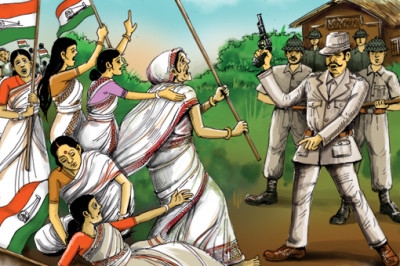
On 20 September 1942, thousands of freedom fighters and villagers gathered at Dhekiajuli Police Station to hoist the Indian National Flag as a mark of defiance against British rule. Tileswari Barua joined the procession carrying a small tricolour and chanting patriotic slogans with other volunteers. The demonstration included men, women, farmers, tea garden workers and young participants united by the dream of an independent India.
When the British police opened indiscriminate fire on the peaceful protesters, many freedom fighters fell to the ground. Witnessing the violence only strengthened Tileswari's determination. She courageously moved forward with the national flag while shouting "Vande Mataram." Moments later, she was struck by a bullet and seriously injured. Fellow volunteers attempted to rescue her, but she ultimately attained martyrdom, becoming one of the youngest victims of British brutality during the freedom struggle.
Martyrdom
Tileswari Barua was martyred on 20 September 1942 during the historic Dhekiajuli Police Station firing. Historical accounts suggest that after she was injured, volunteers and her maternal uncle tried to save her. However, due to continued violence and confusion, she could not be rescued. Her exact final moments remain uncertain, but her sacrifice became an enduring symbol of courage and patriotism.
Historical Significance
The Dhekiajuli incident is regarded as one of the most tragic episodes of the Quit India Movement in Assam. Numerous unarmed protesters, including women and children, lost their lives while attempting to hoist the national flag. Tileswari Barua's sacrifice highlighted the active participation of Assamese youth and women in India's independence movement. Her courage demonstrated that love for the nation transcended age and social status.
Recognition and Legacy
Although her contribution remained relatively unknown outside Assam for many decades, historians and researchers have worked to bring her story to national attention. During the celebrations marking the 75th anniversary of India's Independence, Tileswari Barua was featured among India's courageous women freedom fighters in Amar Chitra Katha, introducing her inspiring life to readers across the country.
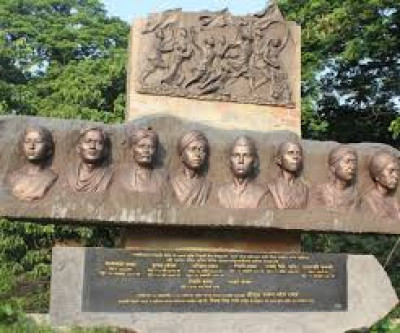
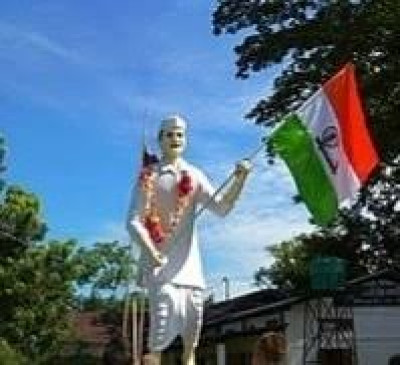
Today, memorial events, educational programs and patriotic functions across Assam remember her sacrifice. Dhekiajuli has become an important site of remembrance where people pay tribute to the martyrs who laid down their lives for the nation.
Achievements
- One of the youngest freedom fighters from Assam.
- Regarded as India's youngest female martyr.
- Participated in the Quit India Movement of 1942.
- Inspired generations through her courage and patriotism.
- Became a symbol of Assam's contribution to India's independence.
Death
Tileswari Barua died on 20 September 1942 after being shot during the Dhekiajuli Police Station flag-hoisting movement in Assam. Her supreme sacrifice at the age of twelve remains one of the most inspiring stories of India's freedom struggle and continues to motivate young generations to value courage, patriotism and selfless service to the nation.
FAQs about Tileswari Barua
1. Who was Tileswari Barua?
Tileswari Barua was a young freedom fighter from Assam who became one of India's youngest female martyrs after sacrificing her life during the Quit India Movement in 1942.
2. Why is Tileswari Barua famous?
She is famous for her bravery in participating in the Dhekiajuli flag-hoisting movement, where she was killed by British police while fighting for India's independence.
3. When was Tileswari Barua born?
Tileswari Barua was born in 1930 in Nij-Borgaon village near Dhekiajuli in present-day Sonitpur district, Assam.
4. How did Tileswari Barua die?
She was shot by British police on 20 September 1942 during a peaceful procession attempting to hoist the Indian National Flag at Dhekiajuli Police Station.
5. How old was Tileswari Barua when she became a martyr?
She was only about twelve years old, making her one of the youngest female martyrs in India's freedom struggle.
6. Which movement was Tileswari Barua associated with?
She actively participated in the Quit India Movement launched by Mahatma Gandhi in 1942.
7. Why is the Dhekiajuli incident important in Assam's history?
The Dhekiajuli incident is remembered for the sacrifice of several unarmed freedom fighters, including Tileswari Barua, who were killed while attempting to hoist the national flag.
8. Did Tileswari Barua receive any national recognition?
Yes. She was featured among India's brave women freedom fighters in Amar Chitra Katha during the 75th anniversary celebrations of India's Independence.
9. What is Tileswari Barua's contribution to India's freedom struggle?
Her fearless participation and supreme sacrifice inspired countless people and highlighted the important role of Assamese women and children in the fight against British rule.
10. Why is Tileswari Barua remembered today?
She is remembered as a symbol of patriotism, courage and selfless sacrifice whose life continues to inspire future generations across Assam and India.