Life & Legacy
Early Life
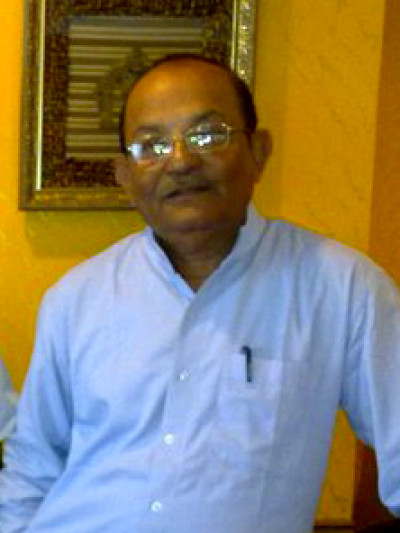
Nuruddin Ahmed was born on 17 January 1958 in Sathikuchi village of Nalbari district, Assam. From an early age, he displayed exceptional interest in drawing, sculpture, and theatre. Growing up in a culturally rich environment inspired him to pursue visual arts as a lifelong profession. His artistic journey began under the guidance of renowned artist Adya Sarma, who encouraged his creative abilities and laid the foundation for his future career.
Education and Artistic Training
To strengthen his artistic knowledge, Nuruddin Ahmed received professional training at the Sir J. J. School of Art, Mumbai. He later specialized in modern sculpture techniques at the Garhi Studio of Lalit Kala Akademi, New Delhi. He also earned a Diploma in Puppetry from the Centre for Cultural Resources and Training (CCRT), New Delhi. These diverse training experiences enabled him to blend sculpture, stagecraft, puppetry, and visual storytelling into a unique artistic style.
Career
Nuruddin Ahmed began his professional career as a puppetry artist before expanding into stage design, sculpture, ambience creation, costume design, and scenography. He soon became one of the pioneering figures behind Assam's famous mobile theatre movement, designing visually impressive stage sets that revolutionized theatrical productions across the state.
Throughout his career, he has designed stage sets and provided art direction for thousands of theatre productions in Assamese and other Indian languages. His creative work combines traditional Assamese culture, Ankia Bhaona, folk motifs, mythology, and modern theatrical technology, making every production visually engaging.
Apart from theatre, he has designed sculptures, Durga Puja idols, cultural pavilions, government exhibition projects, temple structures, Republic Day tableaux, and heritage installations. One of his notable recent works includes the Batadrava Cultural Project associated with the birthplace of Srimanta Sankardeva. He also gained appreciation for creating a life-size statue of Assamese music legend Zubeen Garg, completed as a tribute to the late singer.
Nuruddin Ahmed continues to mentor young artists through Rajdeep Studio in Guwahati and has expressed his vision of establishing an art museum and training institute to preserve Assam's artistic traditions for future generations.
Major Achievements
- Pioneer of modern stage design in Assamese mobile theatre.
- Designed stage sets and art direction for thousands of theatre productions.
- Played a major role in modernizing Assamese stagecraft.
- Designed Republic Day cultural tableaux representing Assam.
- Created numerous sculptures, festival structures, heritage installations, and public art projects.
- Designed the Batadrava Cultural Project associated with Srimanta Sankardeva.
- Established Rajdeep Studio to train aspiring artists and sculptors.
- Received national recognition for promoting Assamese visual arts and theatre.
Positions Held
- Stage Designer
- Art Director
- Sculptor
- Puppetry Artist
- Theatre Scenographer
- Cultural Installation Designer
- Mentor and Founder of Rajdeep Studio
Awards and Recognition
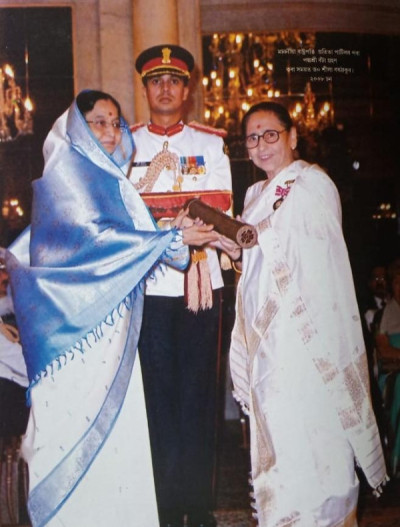
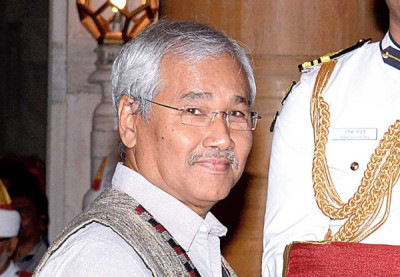
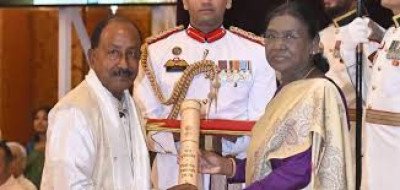
- Padma Shri (2026), Government of India
- Sangeet Natak Akademi Award (2017)
- Kamal Lal Memorial Award for Stage Design (2005)
- Honoured by several cultural and theatre organizations for outstanding contribution to Indian stagecraft and visual arts
Legacy
Nuruddin Ahmed is regarded as one of the architects of modern Assamese stagecraft. His artistic innovations have transformed the visual presentation of mobile theatre while preserving Assam's traditional cultural identity. Through his sculptures, stage designs, public art, and mentorship of young artists, he has created a lasting legacy that continues to inspire theatre professionals and visual artists across India. His Padma Shri honour stands as national recognition of his lifelong dedication to preserving and promoting Assam's rich artistic heritage.
FAQs about Nuruddin Ahmed
1. Who is Nuruddin Ahmed?
Nuruddin Ahmed is a renowned stage designer, sculptor, and art director from Assam known for transforming Assamese mobile theatre and stagecraft.
2. Why is Nuruddin Ahmed famous?
He is famous for his innovative stage designs, sculptures, cultural installations, and significant contribution to Assamese theatre and visual arts.
3. When was Nuruddin Ahmed born?
Nuruddin Ahmed was born on 17 January 1958 in Sathikuchi village of Nalbari district, Assam.
4. Which national awards has Nuruddin Ahmed received?
He received the Sangeet Natak Akademi Award in 2017 and the Padma Shri in 2026.
5. What is Nuruddin Ahmed's contribution to Assamese theatre?
He modernized Assamese mobile theatre by introducing innovative stage design, scenography, lighting concepts, and artistic visual effects.
6. Where did Nuruddin Ahmed receive his artistic training?
He studied at Sir J. J. School of Art in Mumbai, Garhi Studio of Lalit Kala Akademi, and earned a Diploma in Puppetry from CCRT, New Delhi.
7. What are some notable works of Nuruddin Ahmed?
His notable works include theatre stage designs, Republic Day tableaux, the Batadrava Cultural Project, sculptures, Durga Puja installations, and the tribute statue of Zubeen Garg.
8. Has Nuruddin Ahmed written any books?
No officially verified records confirm that he has authored any published books.
9. What is Rajdeep Studio?
Rajdeep Studio is Nuruddin Ahmed's creative institution in Guwahati that promotes sculpture, stagecraft, and artistic training for young artists.
10. Why was Nuruddin Ahmed awarded the Padma Shri?
He received the Padma Shri in 2026 for his outstanding contribution to Indian art, stagecraft, theatre design, sculpture, and the preservation of Assam's cultural heritage.