Life & Legacy
Early Life
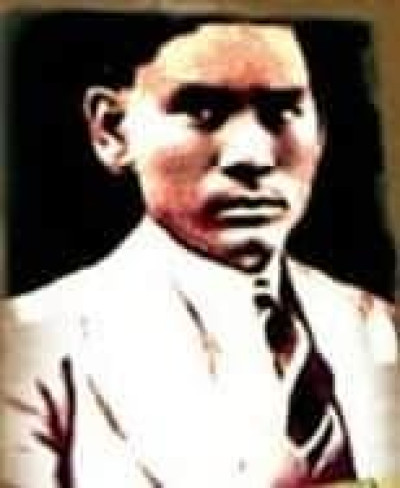
Mahi Chandra Miri was born in 1903 at Alimur village in present-day Lakhimpur district, Assam, into the Mising community. His father, Doley Miri, strongly encouraged education despite limited formal schooling. Mahi grew up surrounded by the forests, rivers, and wildlife of Assam, which inspired his lifelong passion for nature and conservation.
He completed his early education at Sivasagar Government High School before joining Cotton College, Guwahati. In 1927, he earned a Bachelor of Science degree with Physics Honours under Calcutta University, becoming one of the first highly educated members of the Mising community.
Education
Mahi Chandra Miri received his school education in Sivasagar and later studied at Cotton College, Guwahati. After completing his B.Sc. degree, he was selected for the Imperial Forest Service in 1929 along with Madhab Bhattacharjee. He underwent professional forestry training at the Forest College in Rangoon (present-day Yangon, Myanmar), becoming one of the first two Assamese officers to receive this prestigious training.
Career and Forest Service
Following his training, Mahi Chandra Miri joined the Assam Forest Department as an Extra Assistant Conservator of Forests. During the mid-1930s he was posted to Kaziranga, which was then an undeveloped game sanctuary facing widespread poaching and poor infrastructure.
His assignment involved surveying the forests, defining sanctuary boundaries, strengthening forest administration, and protecting wildlife. Working closely with British forester A. J. Milroy, he transformed Kaziranga into an effectively managed protected area. He travelled across dense forests, wetlands, and grasslands on elephant and horseback while conducting anti-poaching patrols and monitoring wildlife.
One of his greatest strengths was his close relationship with the local Mising and Karbi communities. Their traditional knowledge helped him map remote forest areas and identify illegal hunting activities. His people-friendly approach created trust between forest officials and local villagers, an important step in successful wildlife conservation.
Mahi Chandra Miri also supervised the first live capture of a one-horned rhinoceros from Kaziranga for international scientific and zoological purposes. His efforts helped introduce Kaziranga to the global conservation community.
Major Achievements
His contributions to Assam and wildlife conservation remain remarkable.
- One of the first Assamese officers selected for the Imperial Forest Service.
- One of the earliest forest conservation pioneers from Northeast India.
- Conducted the first scientific field surveys of Kaziranga.
- Helped establish effective protection for the Indian one-horned rhinoceros.
- Led extensive anti-poaching operations in Kaziranga.
- Worked closely with indigenous communities for wildlife conservation.
- Helped transform Kaziranga from a hunting ground into a protected sanctuary.
- Assisted in bringing international recognition to Kaziranga.
- Remembered by naturalist E. P. Gee as "the man who put Kaziranga on the world map."
Positions Held
- Extra Assistant Conservator of Forests, Assam Forest Department
- Officer of the Imperial Forest Service
- Forest Officer in charge of survey and protection activities in Kaziranga
Awards and Recognition
Although Mahi Chandra Miri passed away at a young age before receiving major national honours, his contributions have been recognized posthumously.
- Mahi Miri Tower in Kaziranga National Park named in his memory.
- A hill overlooking Kaziranga is known as Mahi Miri Hill.
- Widely honoured as one of Assam's earliest wildlife conservation heroes.
- Recognized as a pioneer in rhino conservation and forest protection.
Personal Life
Mahi Chandra Miri married Indira Miri, who later became one of Assam's most respected educationists and social reformers. She was honoured with the Padma Shri for her outstanding contribution to education and tribal welfare. Together they represented a family deeply committed to public service and the development of society.
Death
While serving in the difficult forest conditions of Kaziranga, Mahi Chandra Miri contracted blackwater fever after years of continuous field work. He passed away on 29 July 1939 at only 36 years of age. His untimely death was a major loss to Assam's Forest Department and the conservation movement. Despite his short life, his pioneering work continues to influence wildlife protection and environmental conservation in India.
Legacy
Today, Mahi Chandra Miri is remembered as one of the earliest architects of wildlife conservation in Assam. His fearless campaign against poaching, scientific management of Kaziranga, and dedication to preserving the one-horned rhinoceros helped create the strong conservation foundation that exists today. His life remains an inspiration for foresters, conservationists, environmentalists, and young people who wish to protect India's natural heritage.
FAQs Mahi Chandra Miri
1. Who was Mahi Chandra Miri?
Mahi Chandra Miri was a pioneering forest officer from Assam who played a major role in protecting Kaziranga and conserving the Indian one-horned rhinoceros.
2. Why is Mahi Chandra Miri famous?
He is famous for transforming Kaziranga into a well-protected wildlife sanctuary and for leading early anti-poaching efforts in Assam.
3. Which community did Mahi Chandra Miri belong to?
He belonged to the indigenous Mising community of Assam.
4. What was Mahi Chandra Miri's role in Kaziranga?
He surveyed the sanctuary, strengthened forest protection, fought poaching, and promoted scientific wildlife conservation.
5. When was Mahi Chandra Miri born?
He was born in 1903 at Alimur village in present-day Lakhimpur district of Assam.
6. What position did Mahi Chandra Miri hold?
He served as an Extra Assistant Conservator of Forests under the Imperial Forest Service.
7. Who was Mahi Chandra Miri's wife?
His wife was Indira Miri, an eminent educationist and Padma Shri awardee.
8. How did Mahi Chandra Miri die?
He died in 1939 after contracting blackwater fever while serving in the forests of Kaziranga.
9. What is Mahi Miri Tower?
Mahi Miri Tower is a watchtower in Kaziranga National Park built in memory of his outstanding contribution to wildlife conservation.
10. What is the legacy of Mahi Chandra Miri?
His legacy lives on through Kaziranga's successful conservation model, the protection of the one-horned rhinoceros, and his pioneering role in Assam's environmental history.