Life & Legacy
Early Life
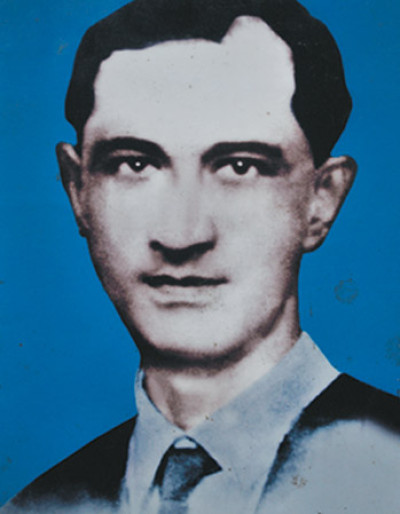
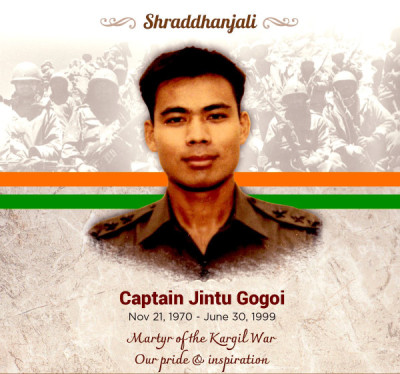
Jintu Gogoi was born on 21 November 1970 in Khumtai, Golaghat district, Assam. He was the son of Flying Officer Thogiram Gogoi, an Indian Air Force veteran, and Duluprabha Gogoi. Growing up in a disciplined and patriotic family, he developed a strong desire to serve the nation from an early age. His father's military background greatly influenced his ambition of joining the Indian Army.
Education
Captain Jintu Gogoi completed his early education in Assam and later graduated from Gandhi Memorial National College. Determined to become an Army officer, he joined the Officers Training Academy (OTA), Chennai, on 9 May 1994. After successfully completing his military training, he was commissioned into the 17th Battalion of the Garhwal Rifles on 11 March 1995. Before being deployed to active operations, he underwent specialized military courses, including Young Officers Training, Winter Warfare Training, and Commando Training.
Military Career
After joining the Indian Army, Captain Jintu Gogoi quickly earned the respect of his seniors and fellow soldiers through his professionalism, courage, and leadership. He served with the 17 Garhwal Rifles, one of the Indian Army's most distinguished infantry regiments. His commitment to duty and ability to lead from the front made him a dependable officer in challenging operational conditions.
Role in the Kargil War
During the Kargil War in 1999, Captain Jintu Gogoi was on leave and had recently become engaged. As soon as the conflict intensified, he immediately reported back to his unit, placing his duty to the nation above personal happiness.
His battalion was deployed in the Batalik Sector under Operation Vijay, where Indian forces were engaged in fierce battles to recapture strategic mountain positions occupied by enemy forces. On the night of 29-30 June 1999, Captain Gogoi was assigned the difficult mission of capturing enemy-held positions near Jubar Ridge and Kala Pathar.
Leading his platoon through steep mountains under darkness, he reached close to the enemy positions despite extremely harsh terrain. His team was suddenly surrounded, and the enemy demanded their surrender. Refusing to give up, Captain Gogoi charged forward with the Garhwal Rifles battle cry, inspiring his soldiers to continue fighting. During the intense encounter, he personally eliminated two enemy soldiers in close combat. Although he suffered severe machine-gun injuries, he continued firing until he collapsed. His courageous action enabled his men to continue the mission and contributed significantly to the successful operation. He attained martyrdom on 30 June 1999 while serving the nation.
Achievements
- Officer of the 17th Battalion, Garhwal Rifles.
- Successfully completed advanced military training in winter warfare and commando operations.
- Led one of the most challenging assault missions during the Kargil War.
- Displayed extraordinary bravery while leading troops in the Batalik Sector.
- Inspired fellow soldiers through fearless battlefield leadership.
- Became one of Assam's most respected military heroes.
Awards and Recognition
- Vir Chakra (Posthumous) for exceptional gallantry during the Kargil War.
- Bir Chilarai Award (Posthumous), conferred by the Government of Assam.
- His battalion received the Battle Honour "Batalik" and Theatre Honour "Kargil" for its role in Operation Vijay.
- Memorials, educational institutions, and sporting events have been named in his honour across Assam.
- The Indian Army organizes the Captain Jintu Gogoi Vir Chakra Memorial Football Tournament to commemorate his sacrifice.
Positions Held
- Lieutenant, Indian Army
- Captain, 17th Battalion, Garhwal Rifles
- Platoon Commander during Operation Vijay in the Kargil War
Death
Captain Jintu Gogoi made the supreme sacrifice on 30 June 1999 during Operation Vijay in the Batalik Sector of the Kargil War. Despite suffering fatal injuries while engaging enemy troops, he continued fighting until his final breath. His courage and devotion to duty remain a shining example of the highest traditions of the Indian Army.
Legacy
Captain Jintu Gogoi is remembered as one of Assam's greatest war heroes and among the state's most respected sons. His sacrifice united people during a difficult period in Assam's history and strengthened the spirit of patriotism throughout the region. His memorial at Khumtai continues to attract visitors who pay tribute to his bravery. Schools, colleges, and youth organizations regularly remember his life to inspire future generations. His unwavering commitment to the nation, fearless leadership, and supreme sacrifice ensure that his legacy will always remain an integral part of Assam's military history and India's story of courage.
FAQs Captain Jintu Gogoi